

A difficult family history can mean many things, including loss, estrangement, an unpredictable home or conflict. A partner’s history may shape what feels comfortable. Let their words and choices guide you when you want to understand how it affects your relationship today.
Start with the situation in front of you. If a family invitation comes up, talk about what each of you wants before assuming how either of you will feel.
On this page
Let your partner set the pace for sharing
“I’m here if you want to talk about it” gives someone a choice. If they do share, ask whether they want you to listen, help with something practical or give them space. Keep personal stories private unless they say it’s okay to share them.
Build trust through everyday follow-through
Keep agreements you make and say early when a plan needs to change. If you said you would call after work and cannot, send a brief update. Apologize for the impact if you miss an agreement and make a realistic plan for next time.
Make family visits easier to navigate
Talk about who will be there, how long you want to stay and how you will leave if either of you needs to. Skipping a particular gathering may be the right call. Let your partner decide what details about their history other people hear.
Agree on what to do during conflict
When a conversation gets tense, slow down and ask about one concrete issue. If either of you needs a break, agree on a time to come back to it. Both people can set limits around yelling, insults or pressure to share.
Talk about the future in practical terms
If marriage, parenting, money or family involvement matters to you, discuss what each of you wants. Try “How would we decide which relatives to see over the holidays?” Keep room for both people’s priorities and revisit decisions when circumstances change.
Read the infographic in text
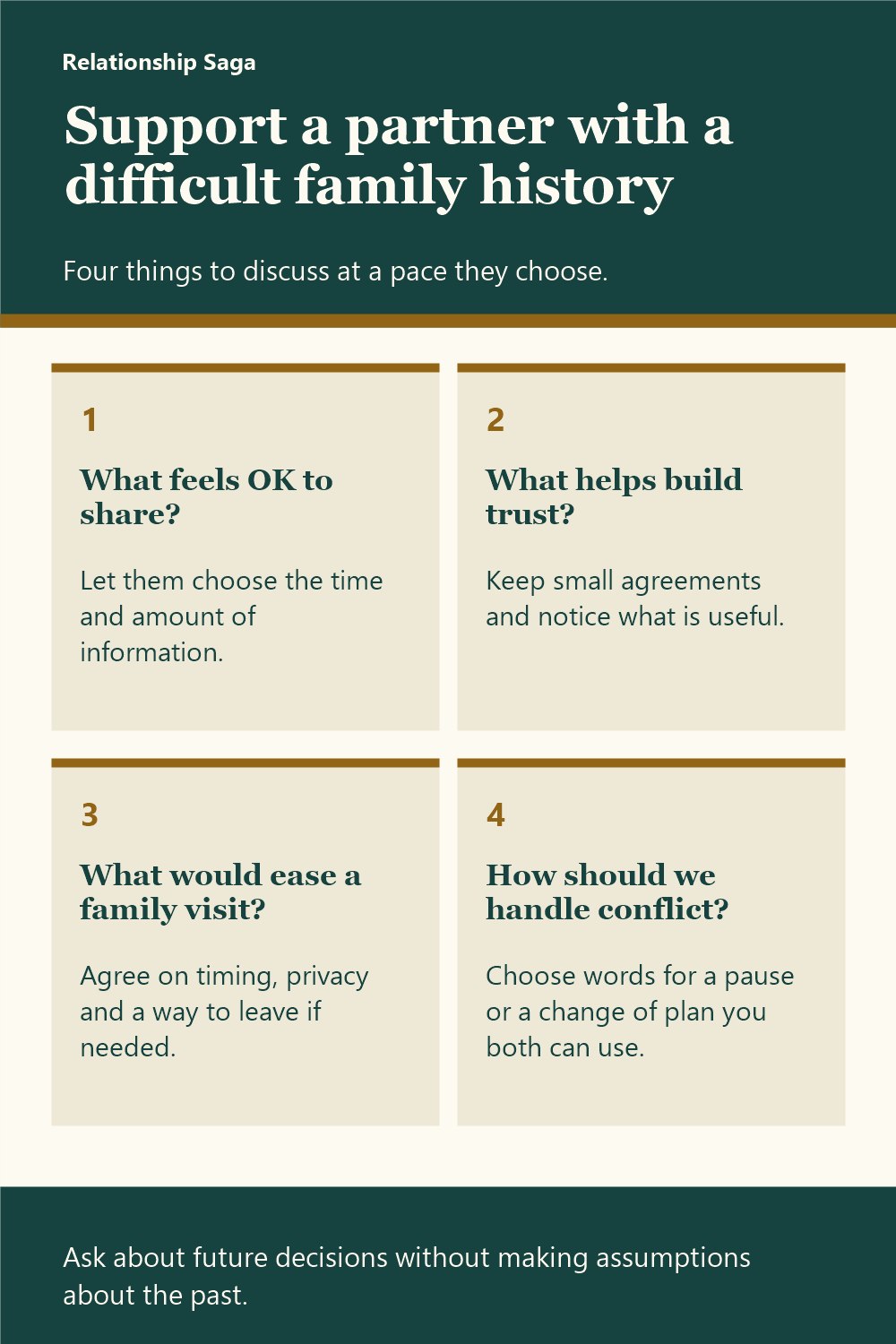
Support a partner with a difficult family history Four things to discuss at a pace they choose.
- What feels OK to share? Let them choose the time and amount of information.
- What helps build trust? Keep small agreements and notice what is useful.
- What would ease a family visit? Agree on timing, privacy and a way to leave if needed.
- How should we handle conflict? Choose words for a pause or a change of plan you both can use.
Ask about future decisions without making assumptions about the past.