

Creating distance can mean ending a relationship, taking a pause or reducing the part someone plays in your day. It does not always mean disappearing, blocking every account or reaching a point where you feel nothing for them.
The useful question is what kind of contact you want, what your circumstances allow and what feels safe. A workable limit is more helpful than a promise that you will never think about someone again.
On this page
Decide what the distance is for
You might need fewer late-night messages, time to decide whether to continue dating, or a clear end to a relationship. Those are different arrangements. Before explaining yourself to someone else, write down what you want to change in concrete terms.
For example: “I need evenings without discussing our breakup,” or “I want our conversations to stay about the work we share.” You do not need to label someone a bad person to want less contact. If you are afraid of retaliation, stalking or abuse, seek individual support before announcing a change. A domestic abuse advocate can help you think through a personal safety plan. If you are in immediate danger, contact local emergency services from a safe place.
Make the contact arrangement clear
If it is safe to communicate, explain the arrangement briefly. You might say, “I am taking a break from personal contact. I will use email for the remaining arrangements about our belongings.” If you are ending the relationship, avoid describing it as a pause you intend to revisit simply to soften the answer.
Choose whether no contact or limited contact fits your situation. With limited contact, name the channel, topics and realistic times you can respond. With no contact, you can state that you will not be continuing the conversation. The aim is a limit you can act on, rather than a tactic to make the other person miss you or chase you.
If you share housing, work or parenting responsibilities, physical separation may take planning. Think about which conversations are necessary and how to keep them focused. Existing parenting arrangements, safety concerns or housing questions may need advice from an appropriate local professional; a general relationship article cannot settle those details for you.
For ordinary digital contact, consider whether muting updates, unfollowing or blocking would serve the boundary you chose. You do not have to make every possible change at once. If you suspect monitoring or fear a reaction, get safety advice before making changes that could alert the other person. Use a safer device when seeking help if one is available to you.
Plan for feelings and support
Missing someone can coexist with wanting distance. You may remember a good day, feel lonely at your usual call time or want reassurance after an upsetting interaction. None of those feelings requires an immediate decision about returning.
Ask for a particular kind of support: company during a difficult evening, help thinking through a practical task or someone to listen without contacting the other person. Choose people who respect your privacy and your decisions. You can also speak with a counsellor if the situation is taking more out of you than you can manage.
Decide in advance how you want to handle apologies, gifts or repeated requests to talk. You can acknowledge a message without reopening the relationship, or choose not to answer when you have already made your limit clear. An offer to change does not obligate you to give another chance.
There is no fixed timetable for feeling settled. Rather than counting days until you should be “over it,” notice a small practical need: a meal, rest, company or a task that has been waiting. If you do make contact you later regret, you can reconsider the arrangement without treating yourself as a failure.
Make everyday contact more manageable
When you cannot avoid seeing the person, prepare for the next likely encounter. At work, that might mean discussing the project and ending the conversation when it becomes personal. At a family event, it might mean arranging your own transport and deciding who you can sit with.
Put something modest into time that used to revolve around them. Meet a friend, return to an interest or make a plan for an otherwise difficult part of the week. You do not have to date someone new or build an entirely new life to make that time your own.
A boundary describes what contact you will take part in; it does not guarantee that someone else will agree or feel pleased. The love is respect guide to boundaries and expectations can help you separate your limits from assumptions about what the other person should already know.
Review the boundary without testing yourself
After trying an arrangement, ask whether it gives you the space you intended. Is the chosen channel being used for practical matters, or does every exchange restart an argument? Do you need a clearer topic limit, help with an unresolved task or more support?
You can be considerate without promising that distance will not hurt. Clear words can reduce confusion, but you cannot manage every feeling the other person has. If you have decided to end things, How to Say a Relationship Is Over: Clear Words, Practical Plans and Safety offers a more focused next step.
Emotional distance is not a requirement to forgive, forget or stop caring. You can keep a memory, feel affection or feel angry while still choosing the contact that works for you. A strong feeling is something to notice, not an instruction you must follow.
Choose one next action: write your contact limit, arrange support for a shared obligation or make a plan for a difficult evening. You can adjust that plan as you learn what helps. You do not have to prove your strength by handling the whole change alone.
Read the infographic in text
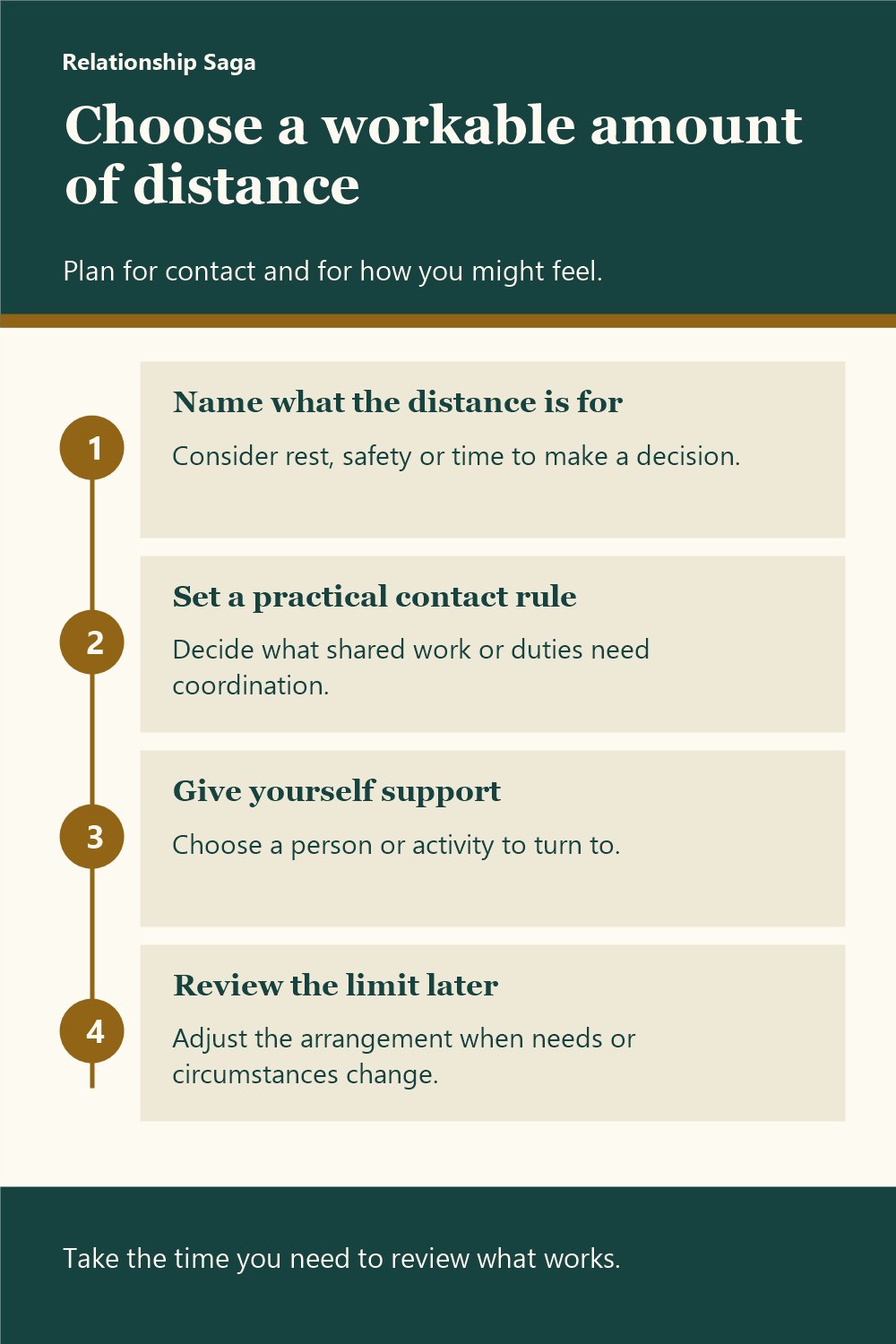
Choose a workable amount of distance Plan for contact and for how you might feel.
- Name what the distance is for Consider rest, safety or time to make a decision.
- Set a practical contact rule Decide what shared work or duties need coordination.
- Give yourself support Choose a person or activity to turn to.
- Review the limit later Adjust the arrangement when needs or circumstances change.
Take the time you need to review what works.