

Unrequited love can hurt even when there was never a romantic relationship. You may miss a friendship, feel embarrassed about having shared your feelings or grieve a future you had imagined. The other person is free not to return your feelings, and your sadness still deserves care.
Moving on does not mean switching off affection or criticising yourself until you stop hoping. It can mean respecting the answer you have, choosing contact that is workable and giving more room to the rest of your life.
On this page
Understand what you are missing
Ask what this person or imagined relationship represented. Perhaps you hoped for companionship, felt understood or enjoyed having something to look forward to. Naming the need can help you find support without making one person’s romantic interest the only possible answer.
You may also be adjusting to a changed friendship. It is understandable to need time before familiar conversations feel comfortable again. Feeling disappointed does not make you foolish, and having cared does not create an obligation for the other person to date you.
Try describing the loss in your own words. “I miss our daily conversations” gives you something more specific to care for than “I have lost my only chance.” You do not need to argue yourself out of the feeling before taking a helpful step.
Respect an answer without decoding every gesture
If someone has said they do not want a romantic relationship, take that answer seriously. A kind message, shared joke or invitation in a group does not cancel it. Repeated declarations, gifts or attempts to demonstrate your suitability can put pressure on both of you.
If the situation has never been discussed, one respectful question may help when the setting is appropriate and there is no pressure or power imbalance. Give the person room to decline. If they have already asked for space, respect that request instead of seeking another conversation.
Beliefs about soulmates or destiny may give personal meaning to a connection. They cannot establish another person’s feelings or override their consent. You can value your experience without treating it as a promise that a relationship must eventually happen.

Choose contact that supports both people
Consider how you feel after spending time together or checking their updates. You might need less private conversation, a pause in social contact or fewer reminders online. Choose a boundary to support your adjustment, rather than as a test designed to make them miss you.
There is no universal number of days that resets feelings. Some people remain friends; others need a longer break or a different kind of friendship. Both people can have limits, and neither has to promise a future friendship to soften a difficult conversation.
If you work together, share a social group or have practical responsibilities, total avoidance may be unrealistic. Keep necessary contact respectful and focused. You can decline optional time together without demanding that other people take sides.
Build support beyond this connection
Choose one source of company or practical help that does not depend on this person’s response. You could arrange a meal with a friend, return to a familiar activity or ask someone to check in after a difficult day. Support does not have to mean discussing the situation every time.
Avoid turning recovery into a competition to become desirable enough. Exercise, clothing, work or new interests can be worthwhile when they serve your own life. They do not need to function as a campaign to change someone else’s mind.
If a friend repeatedly encourages you to pursue someone who has declined, be clear about the help you want: “I am trying to respect their answer. Could we focus on something else today?” Your support system can make space for sadness without keeping the pursuit alive.
Make room for your next choices
You do not have to feel completely over the person before making a plan for yourself. Pick something manageable that belongs to your present life: a routine, an interest or time with someone you trust. Difficult feelings may return, and you can adjust your boundaries when they do.
Dating someone new is optional. If you choose to date, approach the new person as an individual rather than a cure for rejection or proof that you have moved on. You can also decide that friendship and time on your own are what you want now.
If distress is disrupting sleep, eating, work or daily care, consider appropriate professional support. You are not in complete control of every feeling, but you can seek help and make choices about how you respond.
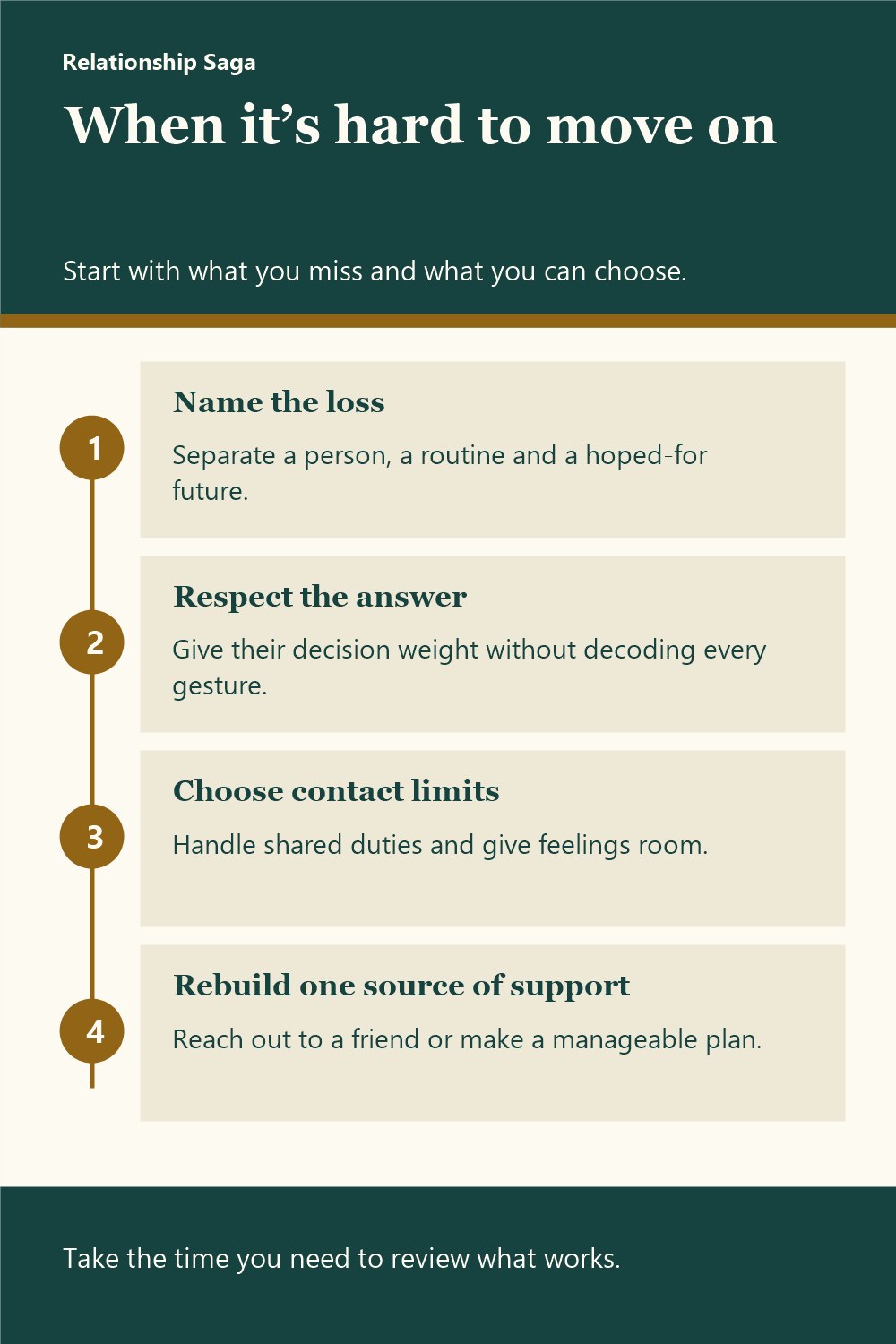
Read the infographic in text
When it’s hard to move on Start with what you miss and what you can choose.
- Name the loss Separate a person, a routine and a hoped-for future.
- Respect the answer Give their decision weight without decoding every gesture.
- Choose contact limits Handle shared duties and give feelings room.
- Rebuild one source of support Reach out to a friend or make a manageable plan.
Take the time you need to review what works.