

Hearing that you should feel happy about a partner’s other relationship can be confusing, especially if your own feelings include jealousy, worry or uncertainty. The word often used for that happiness is compersion.
It describes an experience someone may have, not a standard every caring partner must meet. You can understand the idea while keeping your own preferences, feelings and relationship agreements in view.
On this page
What compersion describes
In discussions of consensual non-monogamy, compersion refers to positive feelings about a partner’s connection with another partner. It may involve joy, warmth or excitement about their happiness.
Research developing a measure of compersion treats it as an emotional experience. Knowing the term does not show that everyone will feel it, or that a particular relationship arrangement will suit you.
Feeling pleased about a partner’s friendships or achievements is a related everyday experience of sharing joy. The term compersion is commonly discussed more specifically around a partner’s other intimate relationships.
Feelings do not replace a relationship agreement
Being happy for someone does not establish consent to an open relationship. Neither does feeling jealous automatically mean an agreement has been broken. Clarify what each person has actually chosen.
Consensual non-monogamy requires the people involved to know about and freely agree to the relevant arrangement. It is different from secrecy or breaking an exclusivity agreement and then asking a hurt partner to become more accepting.
You can prefer monogamy, consider another arrangement or decide you do not want the same relationship. No one needs to agree to something unwanted to prove that they are trusting or generous.
Listen to uncomfortable feelings without turning them into a verdict
Ask what is difficult in this particular situation. Do you miss time together, need clearer plans, feel compared with another person or worry that an agreement was ignored? A specific concern is easier to address than “I am bad at compersion.”
You do not have to force a positive reaction. You might feel happy about one part of a situation and uneasy about another. Give yourself room to describe that honestly.
Feelings also do not justify threats, surveillance or controlling another person’s friendships. Discuss what you can consent to and what you will choose if your needs and the available relationship do not fit.
Talk about needs without demanding enthusiasm
You might say, “I want to understand what you are asking for. I need time to decide what feels right for me.” Or, within an agreed arrangement: “I am glad you enjoyed your time, and I also want us to keep the plan we made together.”
Discuss practical matters such as shared time, privacy, contact and sexual-health agreements where relevant. Ask what information each person wants to hear, and respect the privacy and consent of other people involved.
A supportive response makes room for an honest answer. It does not require someone to hide discomfort, hear unwanted intimate details or celebrate a choice they have not agreed to.
Decide what fits rather than chasing a required feeling
Compersion may be meaningful when it arises, but it cannot guarantee a stronger or happier relationship. Clear agreements, freely given consent and respectful behaviour remain important whether you feel enthusiastic, neutral or unsure.
If conversations leave you pressured or unable to express a preference, step back and consider suitable support. You may choose to continue an arrangement, revise it by mutual agreement or recognise a mismatch.
Caring about a partner’s happiness can coexist with caring about your own needs. You do not have to disappear from the relationship to be supportive.
Read the infographic in text
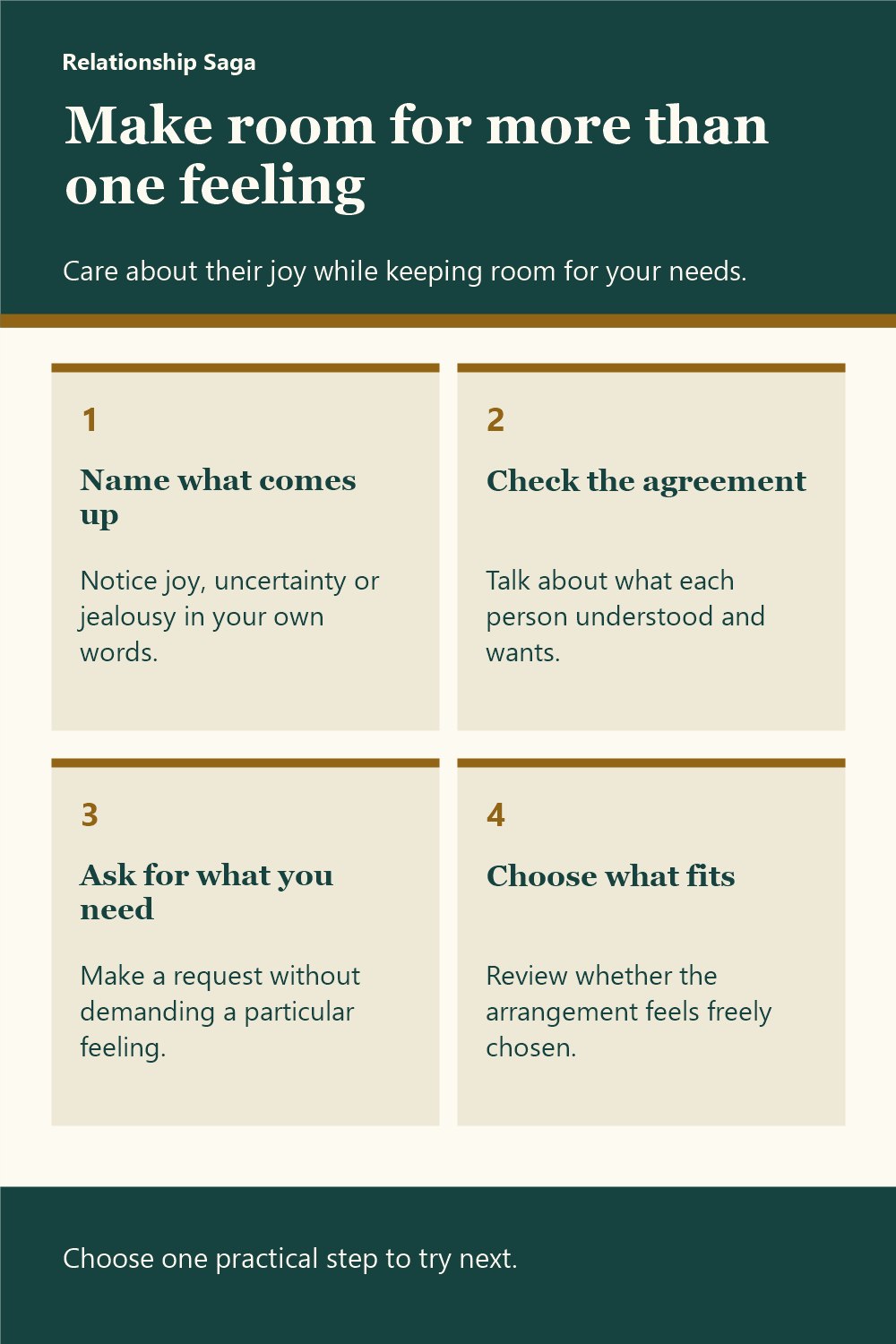
Make room for more than one feeling Care about their joy while keeping room for your needs.
- Name what comes up Notice joy, uncertainty or jealousy in your own words.
- Check the agreement Talk about what each person understood and wants.
- Ask for what you need Make a request without demanding a particular feeling.
- Choose what fits Review whether the arrangement feels freely chosen.
Choose one practical step to try next.