

Dating after 50 can bring a welcome connection and important practical questions. Enjoying someone's company does not yet tell you whether you want the same kind of home life, commitment or future.
Explore those questions gradually. You can be serious about a relationship while keeping separate homes, protecting your finances and taking time to understand how each person's existing life would fit with a shared plan.
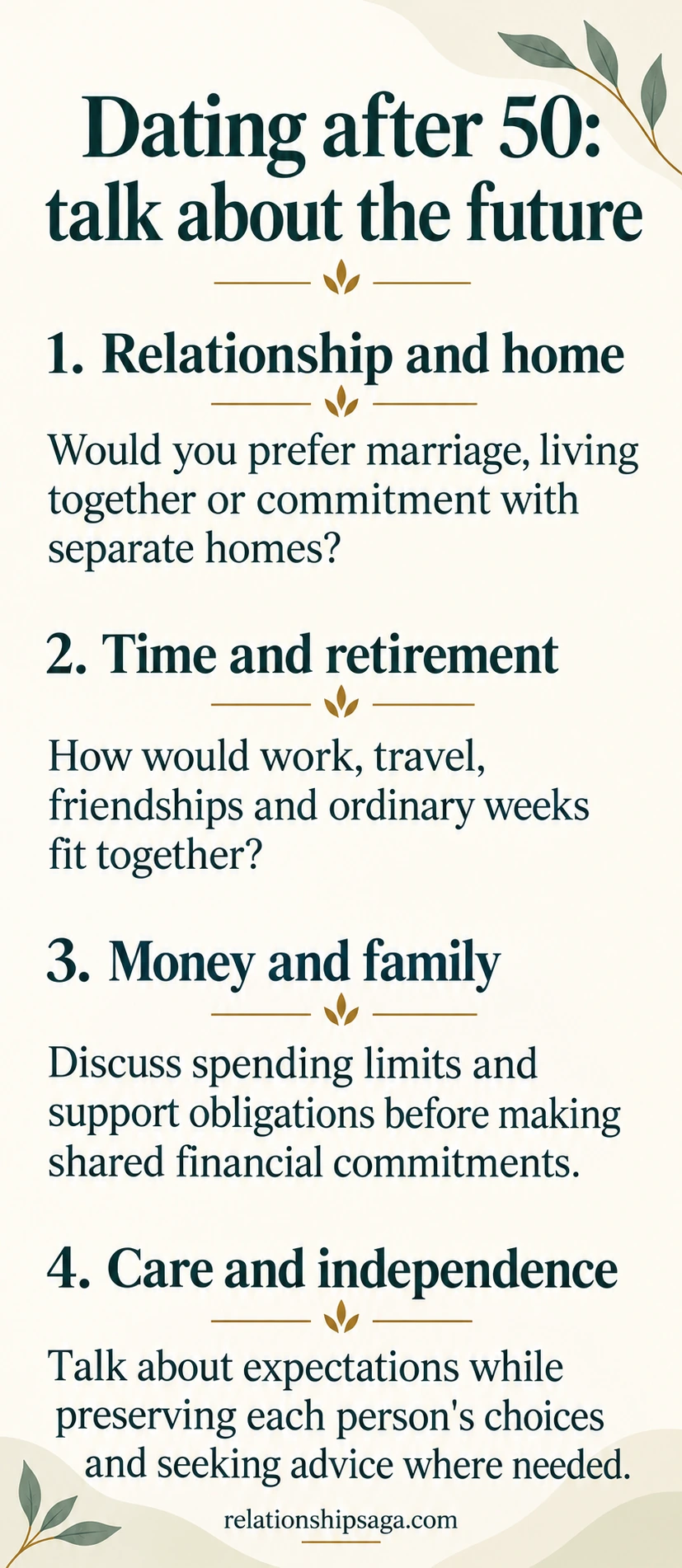
Four future conversations worth having
Read the guide as text
- Relationship and home. Would you prefer marriage, living together or commitment with separate homes?
- Time and retirement. How would work, travel, friendships and ordinary weeks fit together?
- Money and family. Discuss spending limits and support obligations before making shared financial commitments.
- Care and independence. Talk about expectations while preserving each person’s choices and seeking advice where needed.
Start with the Relationship Idea
Ask what a committed relationship would look like to each of you. One person may mean regular companionship, while another imagines marriage and a shared home. Clarifying the word "serious" can uncover a practical difference early.
Discuss exclusivity, marriage and housing as separate questions. You do not need a commitment on the first date, but naming a clear preference can reveal an important mismatch.
For example, you may value companionship while keeping your home, while your date considers living together essential. Learn whether either arrangement is genuinely acceptable instead of hoping affection will erase the difference.
Companionship and intimacy can remain important in later life. Individual preferences vary, so ask what this person wants rather than deciding what someone their age should want.
Be Honest About What You're Looking For
Before creating a dating profile or agreeing to go on a date, take some time to think about what you're looking for in a relationship. Dating after 50 can be a different experience, especially when you've had past relationships and have a better understanding of what you want. Maybe you're interested in finding a serious relationship, but you'd rather take things slowly while getting to know someone.
You might also be interested in meeting new people without knowing exactly what you want in the long run. There's nothing wrong with that, but it's important to be honest about your intentions. For example, you could say, "I'm interested in finding a meaningful relationship, but I want to take my time getting to know someone." This makes your intentions clear without pretending that you're only interested in something casual because you don't want to seem too serious.
Remember that your feelings and expectations might change as time goes on. You don't have to have everything figured out before you start dating. But being honest about what you want and what you're still unsure about gives both people an opportunity to decide whether they're looking for the same things.
Don't Let Your Age Make You Feel Rushed
Dating after 50 can sometimes come with the idea that you should settle for less, move quickly, or simply be grateful when someone shows interest. But just because you're older doesn't mean you have to lower your expectations or accept a relationship that doesn't make you happy. You still deserve to find someone who respects you, shares your values, and wants the same kind of connection.
Your age might influence certain decisions, especially when it comes to your lifestyle, career, health, or future plans. These are all important things to consider, but they don't mean you have to rush into a relationship or follow someone else's timeline.
For example, imagine that Jennifer is 56 and has recently started dating again. She enjoys meeting new people, but she prefers going on a date every other weekend because she has a busy work schedule and enjoys having time to herself. When a friend tells her that she's moving too slowly, Jennifer reminds herself that dating should fit into her life instead of becoming another responsibility.
The important thing is remembering that you're not competing with anyone, including a younger version of yourself. You can date at a pace that feels right for you without worrying about whether someone else thinks you're moving too quickly or too slowly.
Find a Dating Schedule That Works for You
When you're dating over 50, you probably already have a routine that includes work, friendships, family responsibilities, hobbies, and time to relax. Before making plans to meet new people, think about how dating can fit into your everyday life without leaving you feeling overwhelmed.
You might prefer one date every couple of weeks or a little time getting to know people through a dating app. There's nothing wrong with starting slowly and making changes as you become more comfortable. You don't have to fill every free evening with dates just because you're interested in finding a relationship.

It's also important to remember that setting a comfortable pace doesn't mean playing games or purposely ignoring someone to seem less interested. If you enjoy talking to someone and have time to respond, there's nothing wrong with doing so. But you shouldn't feel pressured to be available every minute of the day, either.
For example, if you usually have more free time in the evenings, you might enjoy getting to know someone who has a similar schedule. Finding someone who respects your responsibilities and understands that you have a life outside of dating can make the experience more enjoyable.
The goal is to make dating a positive part of your life instead of something that creates more stress. You can be excited about meeting someone new while still protecting your time, maintaining your independence, and enjoying the life you've already built.
Talking About Money
It doesn't require you to share your account balance or give documents. It does need to respect spending limits. If you plan a date, make sure the restaurant is in your budget. If not, tell them it's outside your budget and ask if they want to try a different one.
As you become more committed to each other, talk about debt, stability, family support obligations, and spending habits. Before you get married or decide to live together, make sure that you talk about the details of your finances and get professional advice if needed.
Don't confuse privacy with dishonesty. A person can decline to share banking information but still be clear about what they can afford. Also, repeated contradictory stories about money need more attention.
Don’t send money to someone that you meet online to get them to come visit, help with an emergency or to give them a way to invest in something. The Federal Trade Commission explains common romance scam patterns. Romantic interest does not remove the need for independent verification and financial boundaries.
Plan a First Date That Fits Your Lifestyle
When you're dating over 50, going on a first date might involve more planning than simply picking a time and place to meet someone. You might have a busy work schedule, personal commitments, or routines that you've grown comfortable with over the years. That's why it's important to plan a first date that works with your lifestyle and doesn't leave you feeling stressed or overwhelmed. Even if the date doesn't lead to another one, you should still be able to enjoy the time you spent getting to know someone.
For an early meeting, pick a public setting and a length of time that leaves your other commitments intact. Coffee or a short lunch can give you a chance to talk without committing the whole day. Keep an independent way home and tell a trusted person your plans.
It's also a good idea to make arrangements that allow you to feel comfortable and independent. For example, you might prefer driving yourself or arranging your own transportation instead of having someone you've just met pick you up at home. Meeting in a public place and letting a trusted friend know where you'll be can also help you feel more comfortable. You don't have to share your home address or change your regular routine just because someone wants to spend time with you.
For an illustrative example, imagine Diane, who is 58 and has recently decided to try online dating. After talking with someone for a couple of weeks, they agree to meet for coffee at a small café near her workplace. Diane has plans with friends later that afternoon, so she suggests meeting for about an hour. She drives herself and enjoys getting to know him without feeling pressured to spend the entire day together. If things go well, they can always make plans to meet again.
This example shows that dating over 50 doesn't have to involve complicated plans or major changes to your schedule. Sometimes keeping things simple can make dating more enjoyable while allowing you to maintain the independence and routines that are important to you.
Keep Dating Expenses Within Your Budget
Dating after 50 can also involve expenses that you might not think about right away. Besides paying for dinner, coffee, or other activities, you might spend money on transportation, dating app subscriptions, or new clothes if you decide to buy something special. Before making plans, think about how much you're comfortable spending and whether those expenses fit into your budget. Dating should be something you can enjoy without worrying about how you're going to pay your regular bills afterward.
Suggest a price range or a low-cost activity before plans are fixed. You might say, "I would enjoy lunch, but that venue is outside my budget. Shall we choose somewhere else?" A partner's response can show whether practical limits are respected.
A paid meal is not a relationship contract. You remain free to decline another meeting, keep personal information private and decide what affection or intimacy you want. Courtesy does not require giving more access to your life.
Keep loans, transfers and investment proposals separate from the excitement of a new connection. Do not share account access or send money to someone you only know online. Consult independent official guidance when a romantic contact introduces an urgent financial request.
If someone you're getting to know asks for financial help and something doesn't feel right, give yourself time before making a decision. You can talk with someone you trust who isn't involved in the relationship and think about whether the request makes sense. You shouldn't feel guilty for protecting your finances or setting boundaries around money.
A sustainable dating budget protects existing bills, family commitments and your own plans. Review spending because it affects your life, rather than treating expensive dates as evidence that a relationship is more serious.
Looking for Someone Who Respects Your Time
One of the things that can make dating over 50 more enjoyable is finding someone who respects the life you've already built. By this point, you might have a career, friendships, hobbies, family commitments, or personal routines that are important to you. A good sign isn't just that someone says they understand your responsibilities, but that their actions show they're willing to respect them.
Pay attention to how someone responds when you need to plan dates in advance, change arrangements, or set limits on late-night messages. Someone who genuinely wants to get to know you should understand that you have responsibilities and interests outside of dating. They shouldn't expect you to rearrange your entire schedule just because they're available at a certain time.
But respect works both ways. You're also responsible for communicating your availability, giving someone notice when plans change, and understanding that their time matters, too. Building a healthy relationship involves making room for each other without expecting either person to give up everything else that's important to them.
For an illustrative example, imagine Robert, who is 62, has plans to meet someone for dinner, but she needs to reschedule because an unexpected work obligation comes up. She apologizes, explains the situation, and suggests another evening. Robert understands that unexpected things happen and appreciates that she's making an effort to reschedule. This is very different from someone who becomes angry, makes accusations, or expects you to prove your interest by canceling other commitments.
Dating over 50 should be about finding someone who adds happiness and companionship to your life instead of making you feel guilty for having one. When both people respect each other's time, communicate openly, and understand that relationships involve compromise, getting to know each other can feel much more comfortable and enjoyable.
Keeping the Future Alive
You can end a conversation about what you agree on, what you’re not certain about, and what needs more advice. This stops a warm conversation from being remembered as a detailed promise that can’t be done.
Look at important subjects before you make big decisions and when things change. A health issue, retirement decision, family need, or financial change can change an arrangement that once worked.
You do not need identical lives. Look for compatible directions, room to negotiate and respect for each person's independence.
Pick one future question for your next conversation and let the answers lead you to ask more questions, and then compare the behaviors. A good match is easier to look at when the imagined future allows for the real lives of everyone involved.
Compare two possible futures before changing your life
For an illustrative example, imagine that one person hopes to retire soon and travel for several months each year. Their partner enjoys work and provides regular help to a nearby parent. Affection does not answer the scheduling question. They might discuss shorter trips, separate travel and what each person can commit to without promising away someone else's care.
In another example, two people want a lasting partnership but disagree about sharing a home. Ask what each arrangement would mean for privacy, guests, expenses, household work and access to friends. A plan for separate homes can be a deliberate relationship choice; moving in should not become a test of love.
Discuss family, care and financial commitments with specifics
Ask whether either person expects to help adult children or relatives, what caregiving responsibilities already exist and how much support each can freely offer. A new relationship does not automatically assign one partner a care role. Talk about what would happen if health or mobility changed, while recognizing that neither person can predict every future need.
Before marriage, joint borrowing, property changes or other major commitments, seek advice appropriate to your jurisdiction and circumstances. Discuss obligations honestly without exchanging passwords or handing over control. Existing arrangements involving children, former partners or beneficiaries may need qualified legal or financial advice.
Choose a future conversation after 50
Pick a practical part of the future for questions that leave room for both people’s preferences.
Age does not create a deadline. Do not let romantic pressure rush financial or other major commitments.
Use the questions and examples in the article above; the draft builder needs JavaScript.
15 questions readers ask
1. What should I discuss when dating after 50?
Start with the relationship each person wants, then explore home, time, money, family and care expectations as trust develops.
2. Do we need to discuss everything on the first date?
No. Learn gradually. Early conversations can establish broad intentions without requiring private records or immediate commitments.
3. Can a serious relationship include separate homes?
Yes, if that arrangement suits both people. Discuss what commitment and time together mean rather than judging seriousness by an address.
4. How do I ask about retirement plans?
Ask how they imagine an ordinary week and the next few years. Discuss work and travel preferences without demanding a fixed prediction.
5. Should we disclose account balances immediately?
No. You can explain spending limits without sharing account access or documents. More detailed conversations belong before major shared commitments.
6. What if we have different incomes?
Choose dates within comfortable limits and discuss how costs will be handled. Paying does not create a right to affection, sex or further dates.
7. Should I lend money to someone I met online?
Do not send money or financial access to an online romantic interest you have not met. Treat emergencies, gift-card requests and investment pitches as reasons to pause and verify independently.
8. How do adult children fit into a new relationship?
Discuss existing responsibilities and reasonable expectations. Avoid promising another person's time, home or support without their involvement.
9. Does dating mean becoming a caregiver?
No. Care responsibilities need explicit discussion and willing agreement. Affection does not automatically assign someone an unpaid care role.
10. What if one of us wants marriage and the other does not?
Clarify whether there is a genuinely acceptable arrangement. Neither person should be pressured to abandon a core preference to prove love.
11. How can I protect my independence?
Keep friendships, interests, transport options and financial boundaries. A respectful partner can make room for the life you already have.
12. What makes a manageable first date?
Choose a public place, your own transport plan and a realistic time commitment. Let a trusted person know your plans.
13. When should we seek professional advice?
Before major property, borrowing, marriage or legal changes, seek qualified advice appropriate to your situation and jurisdiction.
14. Can intuition help me choose a partner?
Intuition can prompt a question or reflection. Compare it with observable behavior and clear conversations before making commitments.
15. How do I know whether our futures fit?
Look for compatible priorities and respectful responses when differences arise. Warm feelings matter, but so does what both people consistently choose and do.