

Meeting someone new does not have to start with a crowded party or a full calendar of dates. You can choose one setting, one manageable conversation and a pace that fits your energy, access needs and budget.
There is no promise that an activity will lead to romance. A useful first aim is simpler: find a way to meet people that you would be willing to try again, while leaving room for mutual interest to develop.
On this page
Choose what you are looking for
Are you hoping for dates, friendship, a wider social circle or some time around people who share an interest? You do not need a permanent answer, but it helps to be honest about your current intention.
Decide what you can offer now. One evening a fortnight may be realistic; several ongoing app conversations may not be. A limited budget or a need for quiet does not make you less ready for connection. It helps you choose a workable format.
If you are dating, identify a few important preferences, such as relationship intentions, availability and how you want to communicate. You can learn about compatibility gradually without treating a first conversation as an interview.
Pick a setting that fits your life
Choose an activity you would value even if you did not meet a potential partner. That could be a local class, a recurring interest group, a community event or an introduction arranged by a friend with both people’s permission.
- For a shared activity: check the cost, venue access and group format before attending.
- For an introduction: ask for an easy first meeting without expectations that either person must want a date.
- For online dating: set a time limit for browsing and check the app’s privacy, blocking and reporting controls.
A class, volunteer role or workplace event is not an invitation to approach everyone romantically. Respect the purpose of the setting, relevant rules and signs that someone wants to keep an interaction brief.
Start a conversation without pressure
Use something you genuinely share in the moment: “Have you tried this class before?” or “What did you think of the speaker?” Listen to the answer, offer a little about yourself and leave space for the other person to contribute.
You cannot reliably infer attraction from politeness, a smile or a helpful reply. If conversation is mutual and the setting is appropriate, you can make a clear invitation: “I enjoyed talking with you. Would you like to meet for coffee another time?”
Accept a refusal without asking for a reason or trying to persuade them. If they do not engage, let the interaction end. A conversation can be pleasant without needing to become a date.
Make a practical dating plan
If you both want to meet, agree on a place, time and approximate length. A short first meeting can leave you free to decide about another one later. You do not need to share your home address or arrange to travel together.
RAINN’s safer-dating guidance recommends a populated public setting, your own transport arrangements and letting someone you trust know the plan. Such steps can reduce risk; another person’s harmful behaviour is never your fault.
Online, be cautious about requests for money or private information. A profile or identity check is not a guarantee of safety. If you feel pressured or uncomfortable, you can end the conversation or meeting and use the platform’s reporting tools when appropriate.
Review the experience at your own pace
Afterwards, ask a few concrete questions: Did I feel respected? Was there room for both of us to speak? Would I enjoy doing this again? You do not have to decide whether someone is a future partner after one meeting.
If a setting was too loud, expensive or tiring, change the setting rather than making it a verdict on yourself. Take a break from dating when you want one. If anxiety repeatedly prevents activities you want to do, a qualified mental health professional can help you explore support.
Your next step might be attending the same group again, inviting someone for coffee or deciding that this person is not a match. The aim is a choice you can make freely, with room for the other person’s choice too.
Read the infographic in text
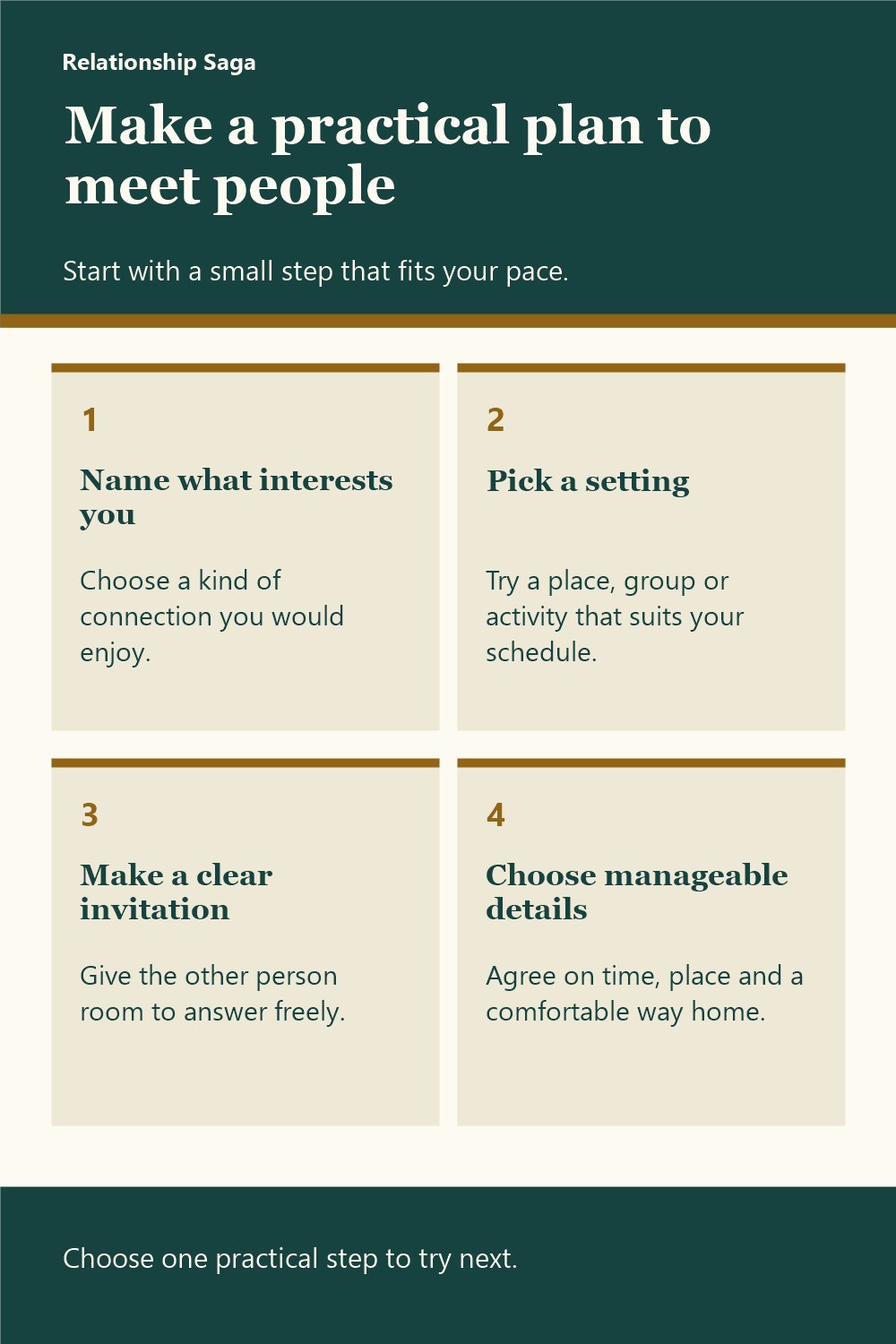
Make a practical plan to meet people Start with a small step that fits your pace.
- Name what interests you Choose a kind of connection you would enjoy.
- Pick a setting Try a place, group or activity that suits your schedule.
- Make a clear invitation Give the other person room to answer freely.
- Choose manageable details Agree on time, place and a comfortable way home.
Choose one practical step to try next.