

If you describe a relationship as karmic, you may see it as carrying spiritual meaning or bringing an important pattern into view. That language can help you reflect on your experience. It does not require you to remain in a relationship that hurts you or to take responsibility for another person’s harmful choices.
Instead of asking only how to fix the connection, ask whether both people want to continue, what would need to change and whether change is safe to explore. A meaningful bond still needs consent, respect and everyday care.
On this page
Separate meaning from behaviour
“Karmic relationship” is a spiritual interpretation rather than a diagnosis of a couple or proof of a past-life obligation. You can value that interpretation while examining the present: how you speak to each other, handle disagreement and respond when one person says no.
Strong attraction, repeated reunions and emotional intensity do not establish that a relationship is destined to last. Ask what happens between those moments. Do you feel able to rest, maintain friendships and make ordinary choices without fear or punishment?
A spiritual practice may offer reflection or comfort. If you consult a psychic or spiritual adviser, keep your own choice central. An interpretation cannot verify someone else’s intentions or guarantee that raising your energy, forgiving or waiting will change their behaviour.
Choose whether to continue
You are allowed to decide that the relationship is not right for you. You do not have to complete a lesson, settle a spiritual debt or wait until you feel fully healed before setting a limit or leaving.
If you both want to explore change, begin with willingness rather than a promise to stay forever. Can each person describe a problem without mocking the other? Can you disagree, ask for time and decline affection without retaliation?
If there are threats, coercion, monitoring or violence, prioritize individual support and safety. Improving your attitude or communication is not a way to make another person stop abusing you. A local domestic-abuse service can help you consider options without requiring a joint conversation.
Make change specific
Take responsibility for your own actions without accepting blame for everything. An apology can identify the behaviour, acknowledge its effect and describe what you will do differently. It does not entitle you to immediate forgiveness or make the other person responsible for reassuring you.
Choose a concrete agreement. For example: “If we need a pause during a disagreement, we will say so and agree when to check back.” Discuss shared tasks, spending or contact in terms both people understand, rather than promising to be more positive in every situation.
Feelings are information, not instructions to hurt each other. You can feel angry, disappointed or jealous and still choose not to insult, threaten or search someone’s phone. If you need time to settle, say what you need where doing so is safe.
The loveisrespect explanation of boundaries distinguishes protecting your own needs from controlling somebody else. A request for quiet time differs from banning a partner’s friendships. Each person remains entitled to privacy, physical limits and independent choices.
Keep support and independence
You do not need to resolve every past hurt before you deserve a respectful relationship. If old experiences are making daily life difficult, qualified individual support may help. You can seek that care for yourself without promising that it will save the relationship.
Keep ordinary sources of stability: people you trust, interests, rest and access to your own practical resources where possible. If reflection, prayer or journaling matters to you, let it sit alongside those supports rather than replacing them.
Couples counselling may be an option when both people freely want it and can participate safely. If you feel frightened or controlled, begin with confidential individual advice about safety instead of assuming that a shared session is the next step.
Review what happens
Agree what you will review and when. Ask whether the specific behaviour has changed, whether responsibilities are shared and whether either person feels pressured to hide concerns. The NHS relationship guidance offers practical ideas for listening, boundaries and regular conversations.
Patience does not fix every relationship. Repeated promises without follow-through are relevant, and either person can decide not to continue. You can acknowledge a connection’s personal meaning while accepting that the arrangement is not becoming workable.
If you leave, plan contact and practical arrangements with suitable support. If you stay, keep checking that the choice remains yours. What you learn from a relationship can matter whether the next chapter involves repair, more distance or an ending.
Read the infographic in text
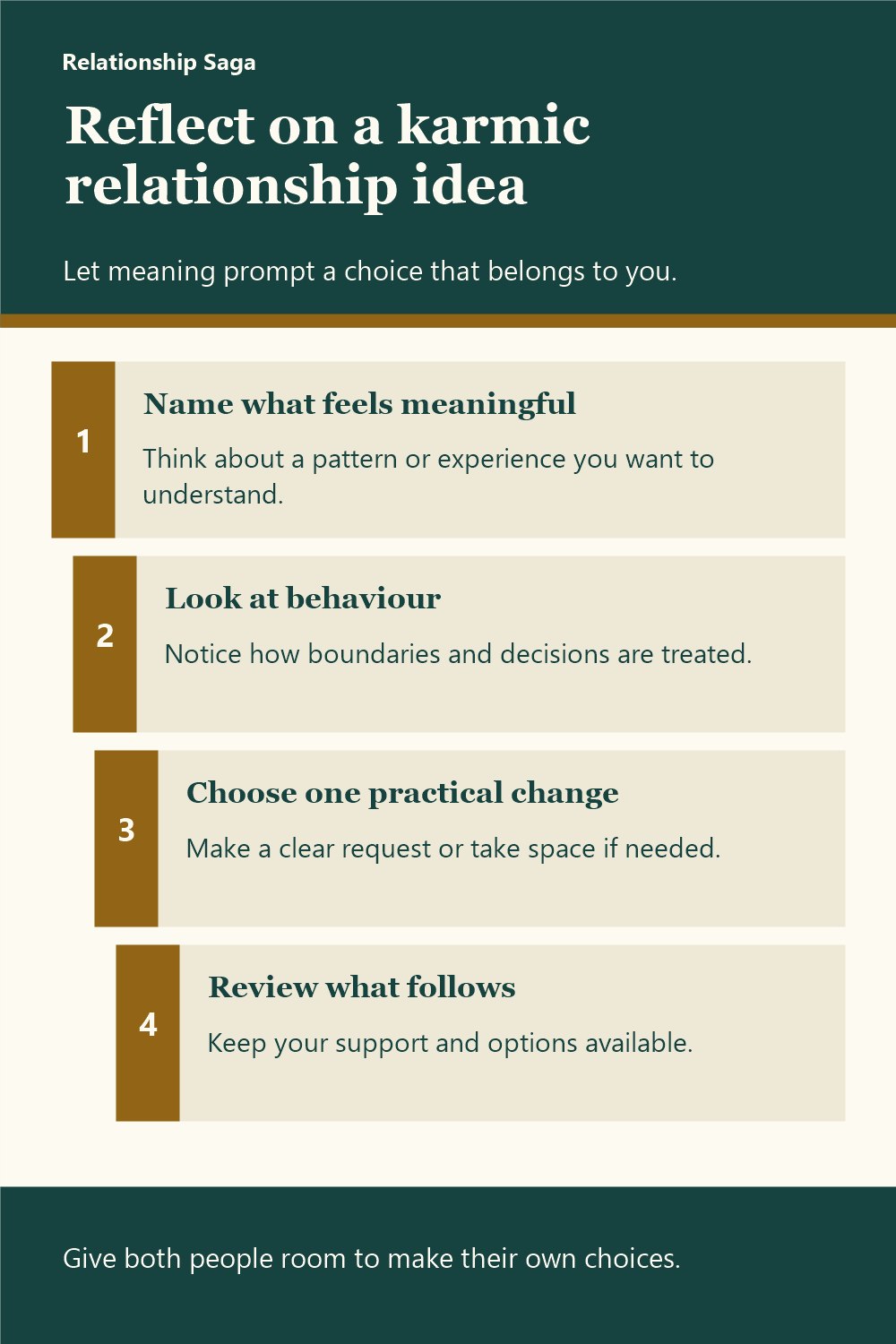
Reflect on a karmic relationship idea Let meaning prompt a choice that belongs to you.
- Name what feels meaningful Think about a pattern or experience you want to understand.
- Look at behaviour Notice how boundaries and decisions are treated.
- Choose one practical change Make a clear request or take space if needed.
- Review what follows Keep your support and options available.
Give both people room to make their own choices.