

A long-distance relationship can include affection, uncertainty, enjoyable routines and frustrating practical limits. Distance alone cannot tell you whether the relationship will work, and finding it difficult does not mean you lack commitment.
Start with the arrangement you both want and what your circumstances allow. Clear expectations about contact, visits and future decisions can help you understand whether the relationship is workable for each of you.
On this page

Agree on a realistic way to stay in touch
Talk about when you are usually available, which kinds of contact you enjoy and what gets in the way. Work shifts, time zones, caring responsibilities and connection quality may affect the plan.
Try a simple agreement: “Could we arrange two calls this week and message if we need to change one?” A predictable plan can be useful, but it should allow sleep, work and other commitments rather than requiring someone to be available at all times.
Discuss what happens when a call is missed. Asking for a new time is more constructive than treating every delay as evidence about a partner’s feelings. If missed arrangements become a pattern, discuss that pattern directly.
Make your relationship agreements clear
Ask what commitment means to each of you. Have you agreed to exclusivity? What do you each understand about dating, flirting or romantic contact with others? Avoid assuming that distance gives you the same expectations without a conversation.
Agreements should respect each person’s autonomy. The digital-boundary questions from love is respect can help you discuss contact, devices and public posts. You can care about someone while keeping passwords private and choosing what to share online.
Say what you want and hear what your partner is willing to offer. If the arrangements differ, that is something to decide together. Monitoring a person more closely cannot create their agreement.
Share everyday life without constant access
Choose a few ways to include each other in ordinary moments. You could describe something that happened at work, send a photograph you are comfortable sharing or talk about a book you are reading.
For shared time, try a game, a meal over a call or a film you can discuss afterwards. Agree on the activity rather than leaving a camera running because one person wants proof of what the other is doing.
There is room for difficult feelings as well as enjoyable contact. You can say, “I miss you and this week has been hard,” without pretending to be confident all the time. Ask for the reassurance you need without requiring constant reports or giving up your own life nearby.
Plan visits you can both sustain
Discuss the whole cost of a visit: travel, time away from work, caring arrangements and the energy involved. A fair plan does not always mean splitting every expense equally, but it does require both people to have a voice.
Choose a schedule that reflects what is possible. If you cannot visit as often as you hoped, be honest about that limit. Do not promise a trip you cannot manage or expect one person to give up every free weekend.
Leave some room for ordinary time when you meet. A visit does not need to make up for every missed occasion, solve every disagreement or include sex. Discuss expectations and rest as well as special plans.
Discuss the future without a forced deadline
Ask whether you want distance to continue, expect it to change or are still exploring what is possible. Living in the same place may involve work, housing, family or other decisions that neither person can settle immediately.
You do not need to invent a relocation date to prove commitment. You can agree on a next step, such as exploring an option or revisiting the question after a known change. Be clear about uncertainty rather than using an undefined “someday” to avoid the subject.
Check whether the arrangement still fits both people’s needs. Either person can decide that long distance is no longer something they want. An honest change of direction is different from failing a test of love, and a shared plan should remain a choice for both of you.
Read the infographic in text
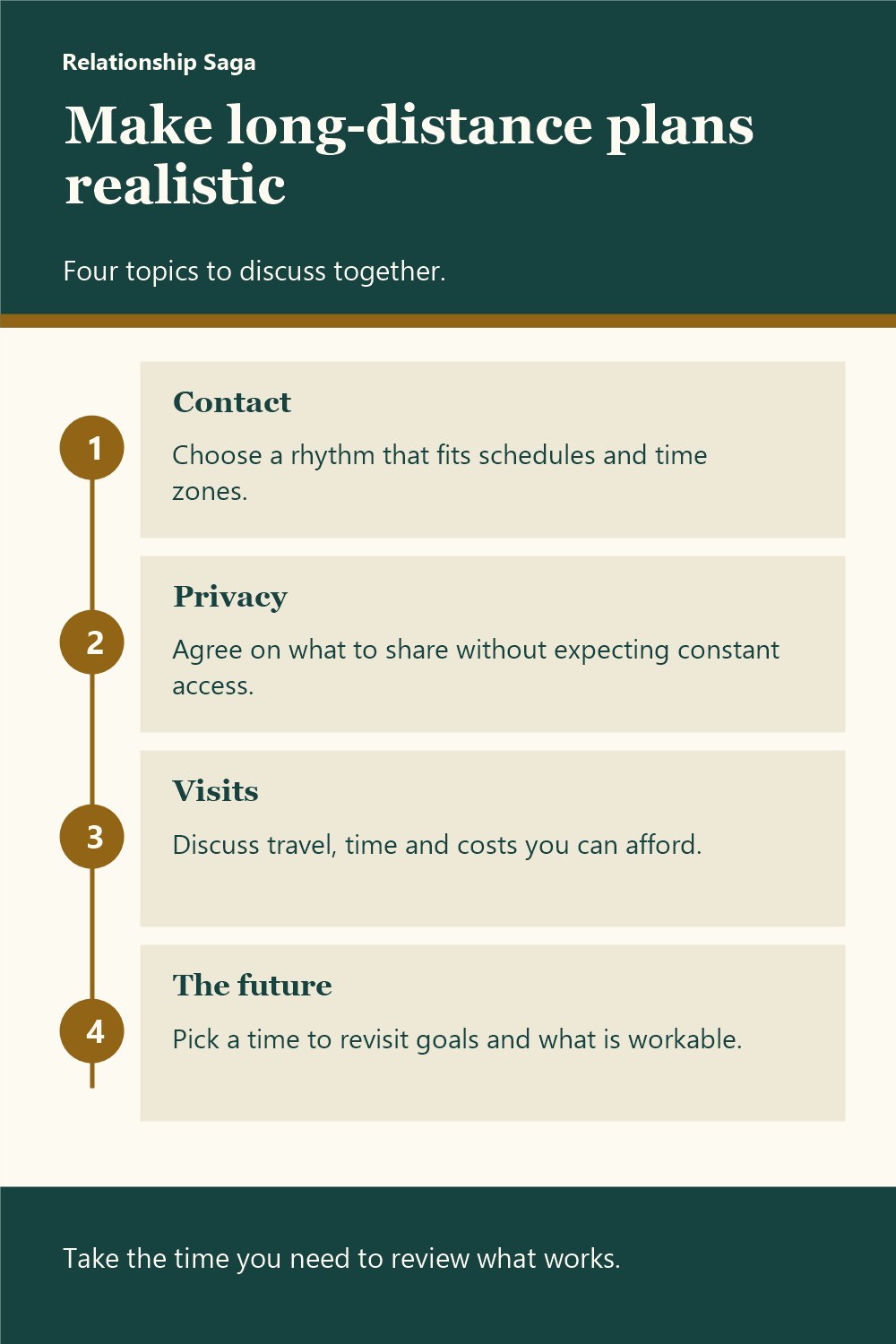
Make long-distance plans realistic Four topics to discuss together.
- Contact Choose a rhythm that fits schedules and time zones.
- Privacy Agree on what to share without expecting constant access.
- Visits Discuss travel, time and costs you can afford.
- The future Pick a time to revisit goals and what is workable.
Take the time you need to review what works.