

Wanting to date a friend can bring excitement and uncertainty at the same time. You already know parts of one another’s lives, but friendship does not tell you whether the other person wants romance, a particular kind of commitment or any change at all.
You can think about what you want, make a clear invitation and respect the answer. You do not have to turn the conversation into a surprise test, read friendliness as hidden attraction or promise that the friendship will stay exactly the same.
On this page
Check your own wishes
Ask what you hope would change if you started dating. Are you curious about a romantic connection, hoping for an exclusive relationship or responding to a recent moment of closeness? You can be interested without deciding that this person must be your future partner.
Notice what you know and what you are guessing. Shared jokes, eye contact or a supportive conversation may be part of friendship. They do not establish romantic interest, and you do not need to collect enough “signs” before asking a respectful question.
Consider whether either of you has an existing relationship or another commitment that matters to the invitation. Do not rely on a plan to change their mind about someone else. If they have already said they do not want to date you, respect that answer rather than treating continued friendship as a new opening.
Make a clear invitation
Choose a moment when the other person has room to respond. You might say, “I enjoy our friendship, and I’ve been wondering about going on a date. Would you be interested?” A simple invitation is often easier to answer than a long account of why you would be perfect together.
Be clear enough that they know you mean a date. Suggesting the same coffee you have every week without mentioning your interest can leave both people relying on different assumptions. You can use a message if that gives each of you more space to think.
Keep the conversation free of an audience. Avoid making an announcement to a friendship group or asking other friends to persuade them. Their answer belongs to them, and private feelings do not need to become a group decision.
Let the answer be real
If they are interested, discuss a particular plan. If they are unsure, you can give them time without arranging a campaign to win them over. Ask whether they want to return to the conversation, and continue making your own plans while you wait.
If the answer is no, acknowledge it without bargaining. “Thanks for telling me. I respect that” is enough. You do not need to demand a reason, compare yourself with people they have dated or prove that your friendship entitles you to a chance.
You are allowed to feel disappointed. Respecting an answer does not require pretending the conversation meant nothing to you. Take that feeling to a supportive person who will respect privacy, rather than making your friend responsible for changing it through romance.
Try dating as a new arrangement
If you both want to date, treat it as something you are exploring together. Years of friendship can give you familiarity, but you still need to ask about romantic expectations, physical affection, exclusivity and how quickly each person wants to move.
Choose a date that helps you discover something beyond your usual routine. You might try a public exhibition, a meal or a walk where you can talk. There is no need to stage a dramatic evening to prove that the relationship has changed.
Friendship does not create permission for kissing or sexual contact. RAINN’s explanation of consent emphasizes freely given, ongoing agreement. Ask, pay attention and stop if the other person is unsure or changes their mind.
Check in after a few experiences together, or whenever a question arises. “How is this feeling for you?” leaves room for a different answer from your own. Dating may suit both of you, or you may discover that you want different things.
Care for the friendship and yourself
Discuss what contact you each want if dating does not begin or later ends. Some people welcome ordinary friendship; others need a period of distance. Either person can ask for space without being punished for it.
If you share friends, agree where possible on a brief explanation and avoid inviting people to take sides. Continue respecting private messages and personal information. You can seek support without circulating intimate details or asking others to lobby for a reunion.
You cannot guarantee that expressing interest will leave everything unchanged. You can choose an approach that allows honesty, respects a refusal and gives both people room to decide what kind of connection they want next.
Read the infographic in text
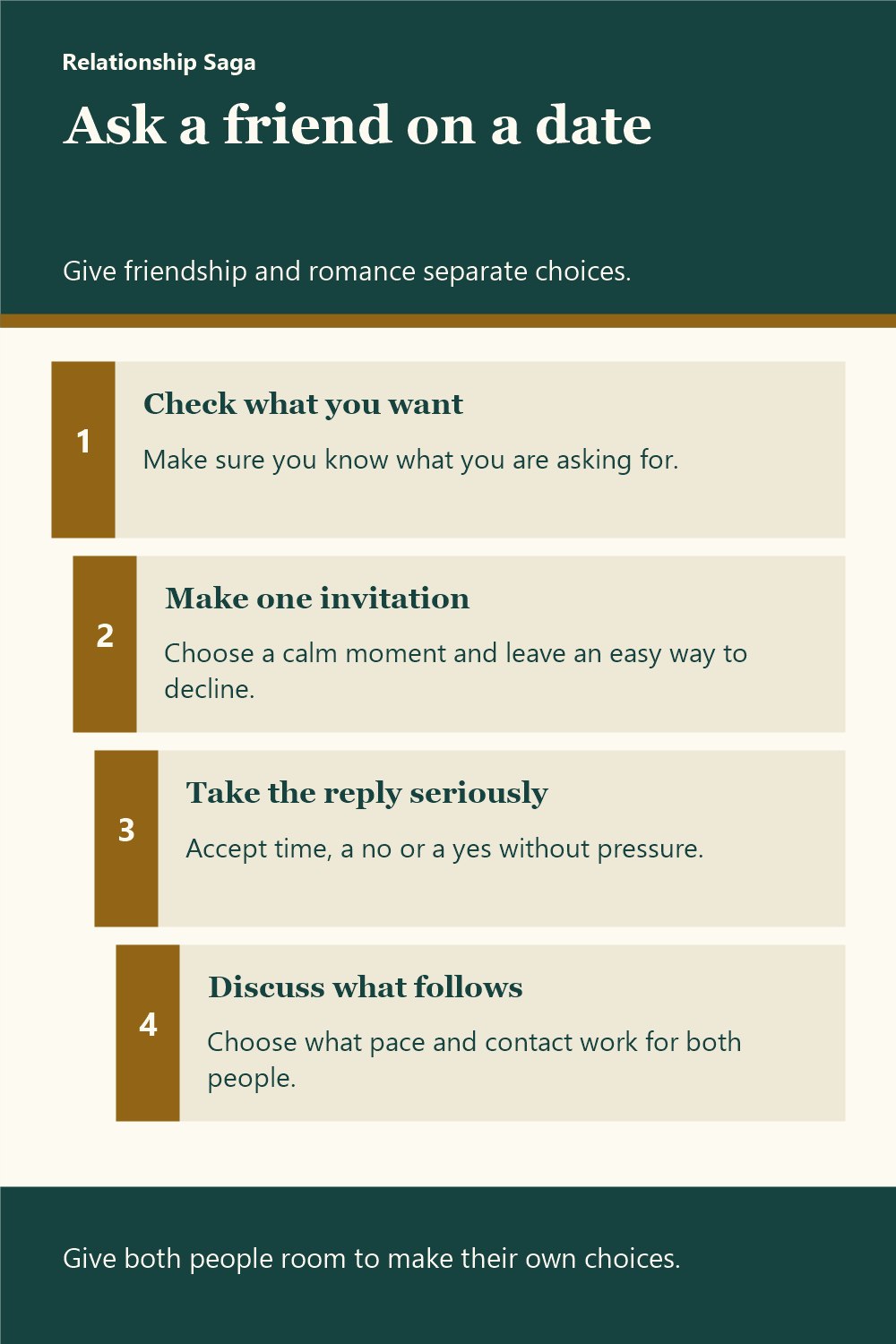
Ask a friend on a date Give friendship and romance separate choices.
- Check what you want Make sure you know what you are asking for.
- Make one invitation Choose a calm moment and leave an easy way to decline.
- Take the reply seriously Accept time, a no or a yes without pressure.
- Discuss what follows Choose what pace and contact work for both people.
Give both people room to make their own choices.