

A long-term relationship is built in ordinary moments: how you respond after a sharp comment, how you divide a tiring week and how often you notice what the other person did. Choose one habit that fits your life and try it together for a week.
If one person is already carrying most of the effort, start by discussing what each of you is willing and able to do.
On this page
1. Make apologies specific
Name what you did and what you will change. “I interrupted you while you were explaining what happened. I’ll listen until you finish.” Give your partner time to respond. If the problem comes up again, revisit what would make the change possible.

2. Set aside a short check-in
Try ten minutes on a day when you can both give the conversation your attention. Ask what felt good this week and what could be easier. Before offering solutions, ask “Do you want my help thinking through this, or would you like me to listen?”
3. Make room for time alone
Tell each other what helps you recharge. If you need space during a tense conversation, say when you can return to it. “I need half an hour to cool down. Can we pick this up after dinner?” Keep the agreed time or communicate if you need to change it.
4. Make plans for family and friends together
Talk through invitations before replying, especially when travel, cost or a difficult family dynamic is involved. Ask which events matter most and where you each want to go on your own. Agree on arrival and departure times when a visit could feel demanding.
5. Build memories in ways you both enjoy
Bring back something low-effort you already like: a walk on the same trail, a shared playlist or breakfast at home. Shared humor can bring you closer when both people enjoy the joke. If there’s still a sore point after an argument, make space to talk it through too.
6. Give differences room and discuss decisions that affect both of you
You can keep separate interests and make independent plans. For decisions about money, parenting or time, name the actual trade-off and look for an agreement you can both live with. Agree when to check whether it is working.
7. Notice the care you receive and offer it in return
A specific thank-you makes the effort visible. “Thanks for handling dinner when I had a late meeting.” Ask what would lighten the other person’s week and take on something you can realistically finish. At the end of the week, keep the habit that helped both of you.
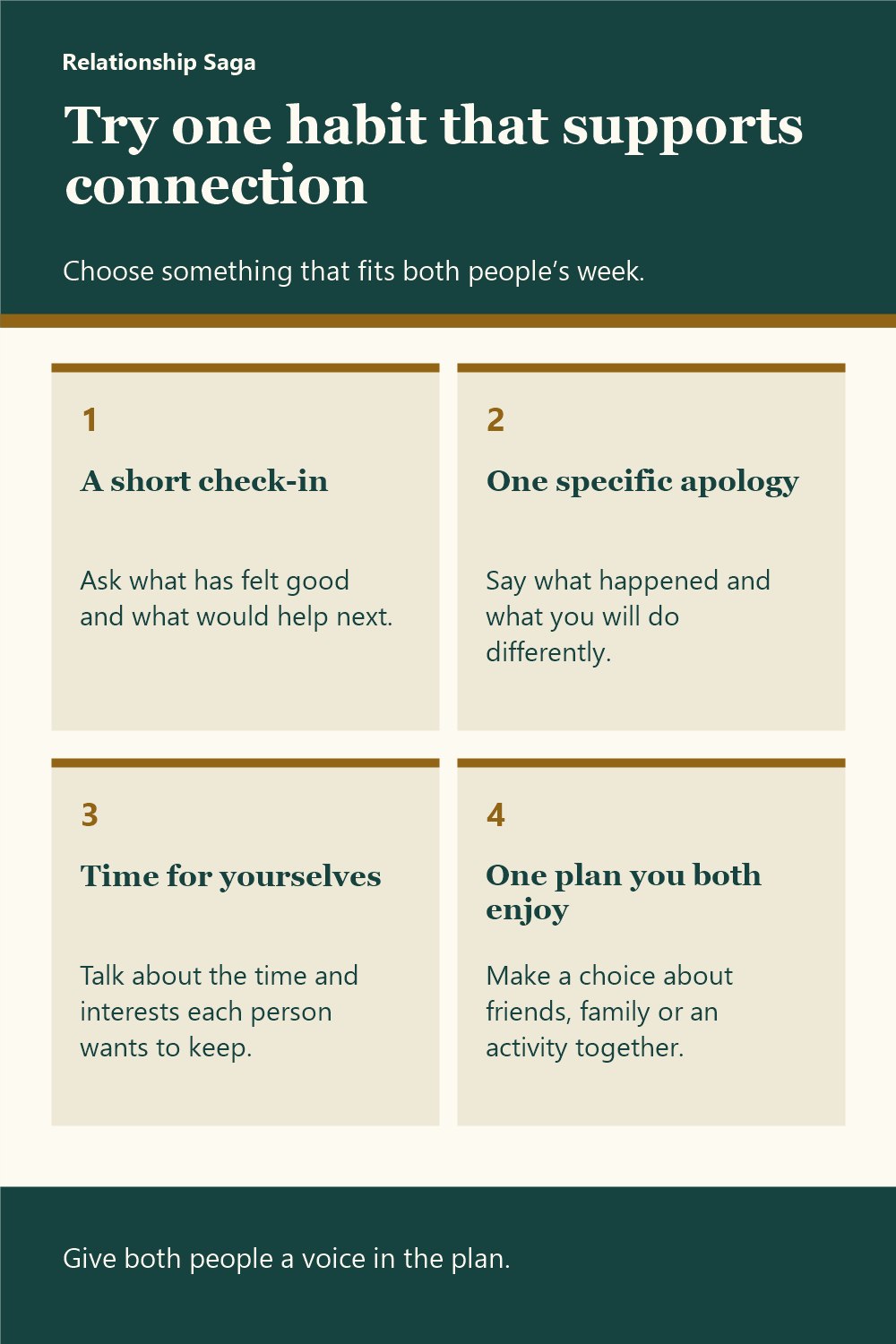
Read the infographic in text
Try one habit that supports connection Choose something that fits both people’s week.
- A short check-in Ask what has felt good and what would help next.
- One specific apology Say what happened and what you will do differently.
- Time for yourselves Talk about the time and interests each person wants to keep.
- One plan you both enjoy Make a choice about friends, family or an activity together.
Give both people a voice in the plan.