

If you’d like to feel more comfortable spending time alone, start with a short period and an activity you actually want to do. You can enjoy being alone and still want regular company. If you feel lonely, that may be a reason to reach out.
Notice when being alone feels hard. Is it just after work, when you see other people’s weekend plans, or when you’re facing a long evening with no plan? Pick one small change that fits that moment.
On this page
1. Decide whether you want quiet or company
Ask what would help in the next hour. You may want a break from conversation, or you may want to hear a familiar voice. If you want company, send a specific invitation, such as “Would you like to talk for ten minutes after dinner?”
If comparing your life to other people’s updates makes the evening feel worse, mute those accounts for a while and notice whether your time feels different. Keep the contacts you use for support within reach.
2. Make a small solo plan
Try ten minutes with an activity that has a clear beginning. Make something to eat, spend time outdoors if it suits you, or pick up a hobby you can leave unfinished. Give yourself permission to change plans if you aren’t enjoying it.
For a first outing alone, choose a familiar café, a quiet library visit or a short walk in a place you know. Decide when you’ll head home so the plan feels manageable.
3. Build a routine with room for choice
Try putting one small solo plan and one social plan on your calendar. You might cook a meal you like on Tuesday and invite a friend to a walk on Saturday. If one plan falls through, you still have something else to look forward to.
You don’t have to turn every hour alone into self-improvement. Try a mix of activities you enjoy, everyday chores and time when nothing needs to get done.
4. Keep your sources of connection
Think about the kinds of contact that make you feel understood. A recurring call, a class, volunteering or seeing a friend in person can give you different ways to be with other people. Start with an option that fits your time, energy and budget.
If you’ve been withdrawing, pick one person you feel comfortable contacting. You can say, “I’ve been a little isolated lately. Would you be up for coffee?”
5. Ask for more help if loneliness persists
If you keep feeling isolated, or sadness or anxiety is getting in the way of sleep, meals or daily tasks, consider talking with a qualified mental health professional. You can also ask someone you trust to help you make the first call.
At the end of the week, notice which activities gave you room to rest and which moments made you want company. Use that information to make one adjustment next week.
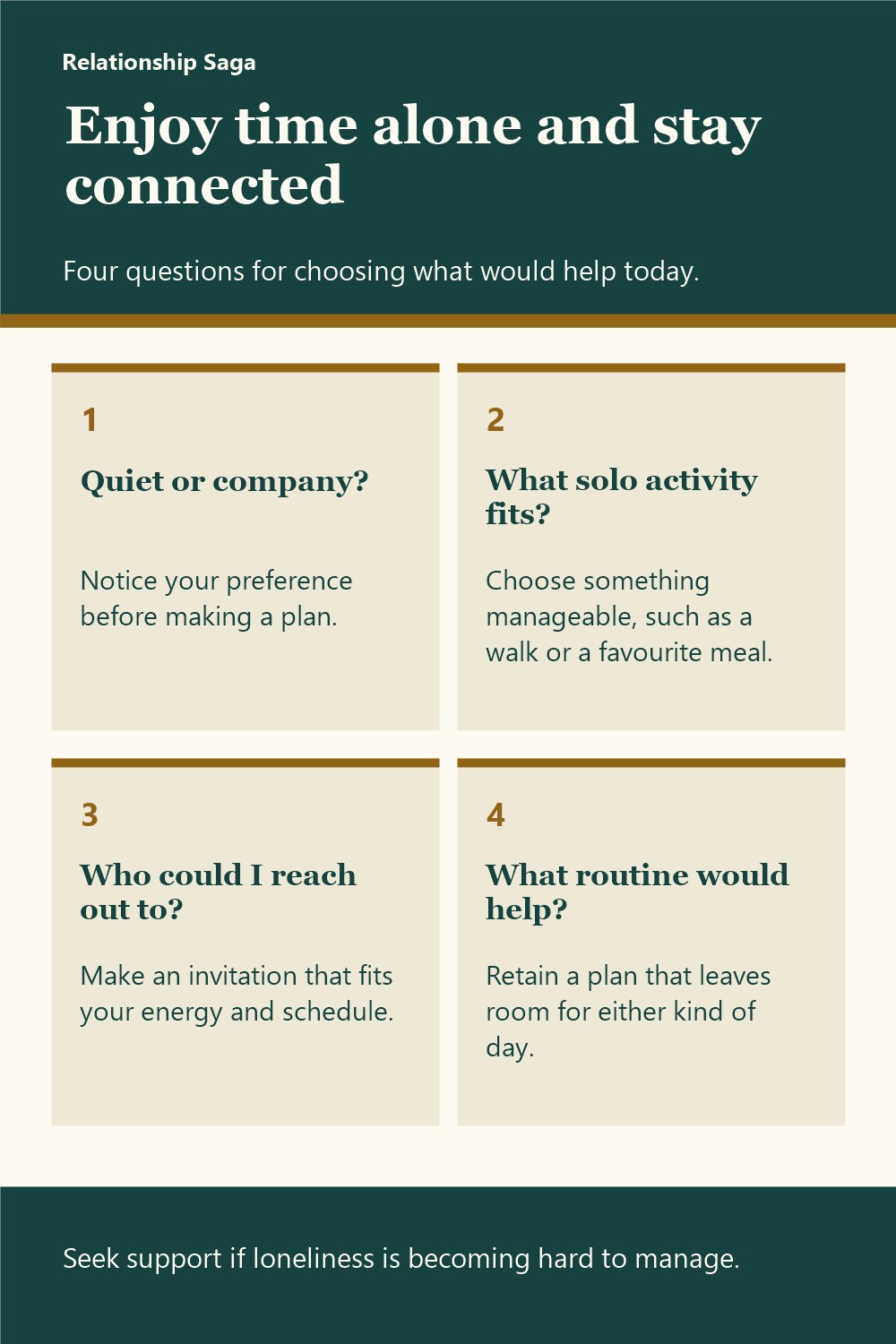
Read the infographic in text
Enjoy time alone and stay connected Four questions for choosing what would help today.
- Quiet or company? Notice your preference before making a plan.
- What solo activity fits? Choose something manageable, such as a walk or a favourite meal.
- Who could I reach out to? Make an invitation that fits your energy and schedule.
- What routine would help? Retain a plan that leaves room for either kind of day.
Seek support if loneliness is becoming hard to manage.