

When someone doesn’t return your feelings, you can take their answer seriously and still need time to grieve. Start with what they’ve actually said and what you need in order to go about your day. You can choose a little distance without treating it as a strategy to change their mind.
If you’re already a couple, ask whether they want to work on the relationship with you. If you aren’t together and they’ve declined, give them room to keep that answer.
On this page
1. Respond to the answer you have
If the other person has said they don’t want a relationship, treat that as the answer. If their intentions are genuinely unclear and they’ve left room for a conversation, you can ask once: “I’d like to date you. Would you want that too?” Give them space to decline.
If you’re in an established relationship and feel disconnected, name one thing that has changed and ask whether they want to work on it with you. Their willingness to talk and follow through gives you information you can use.
2. Choose how much contact you can manage
If regular messages keep you hoping the answer has changed, consider muting updates or taking a break from one-to-one time. You can say, “I need some space, so I’m going to step back from our chats for a while.”
If you work together or share responsibilities, keep contact focused on what needs to happen. You can make room for your feelings away from those exchanges.
3. Put words to what you’ve lost
It may be the person’s company, an idea you had for the future or the feeling that something was about to begin. Naming that loss can help you decide what you need. You may want someone to listen before you want suggestions.
4. Give yourself room to be sad
There’s no deadline for feeling better. Choose something you can manage this evening, such as a meal, a walk or a quiet hour with music. If distress keeps making work, sleep or daily life hard, consider talking with a mental health professional.
5. Move reminders out of sight
If a photo or message thread keeps pulling your attention back, archive it or put the object away. Try a reversible change first if you aren’t ready to decide what to keep.
6. Ask one person for specific support
Try, “Could we go for a walk this weekend? I’d like company and I don’t need advice today.” A specific request gives people a way to help and lets you choose how much to share.
7. Make a plan you can look forward to
Choose an activity that has a reason of its own, such as joining a friend for lunch, returning to a class or taking a day trip you’ve been putting off. It’s okay to keep it short and leave when you’ve had enough.
8. Notice what you want next time
When you feel ready to reflect, write down what felt meaningful and what you want to be different next time. You might want someone who clearly wants the same relationship or who makes time without being asked every week.
9. Treat mutual interest as a requirement
You don’t have to argue for your worth. If the other person changes their mind someday, you can decide then what you want. For now, make choices based on the answer you have and the life you want to return to.
Read the infographic in text
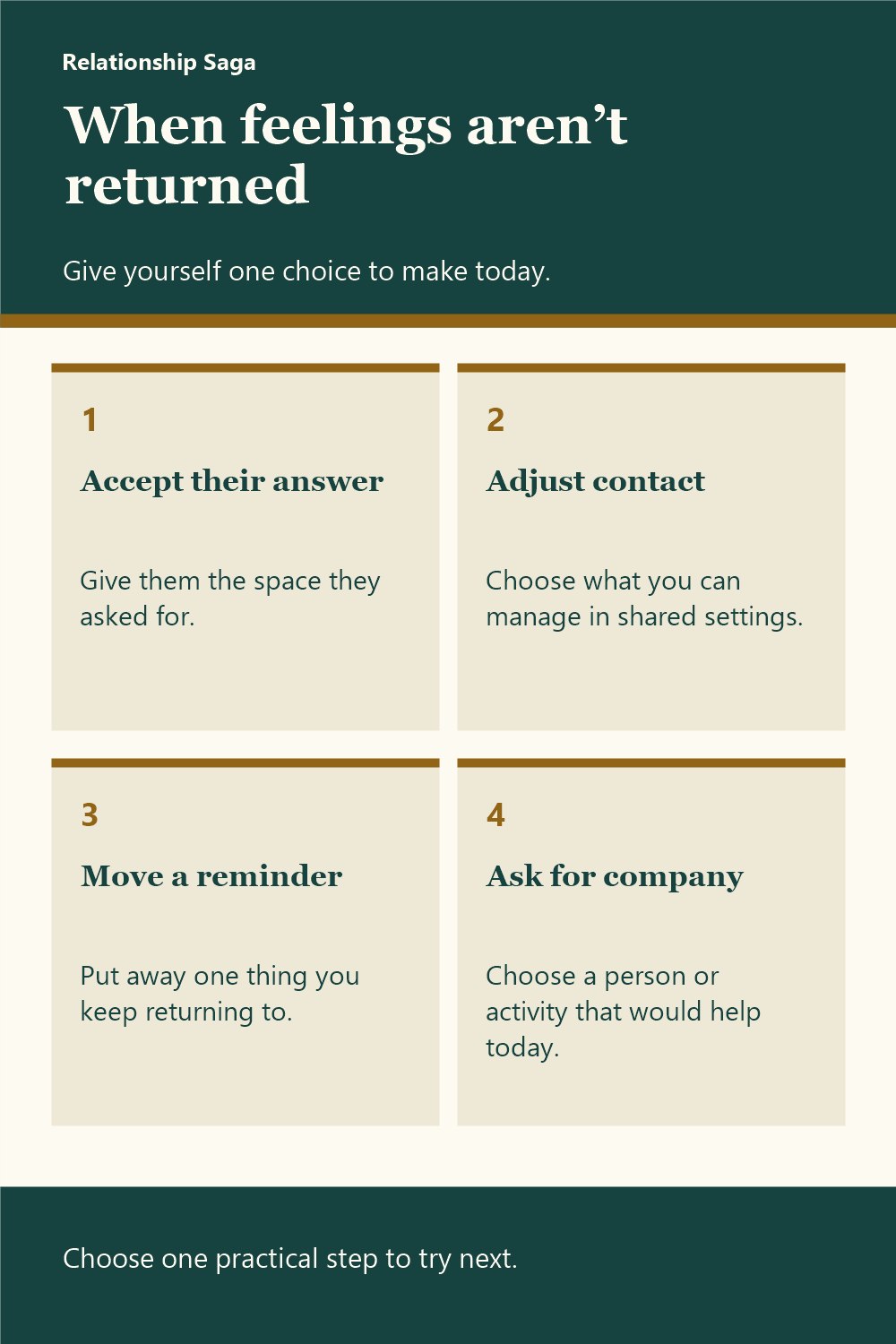
When feelings aren’t returned Give yourself one choice to make today.
- Accept their answer Give them the space they asked for.
- Adjust contact Choose what you can manage in shared settings.
- Move a reminder Put away one thing you keep returning to.
- Ask for company Choose a person or activity that would help today.
Choose one practical step to try next.