

If your relationship feels as though it is falling apart, begin with one issue you can describe. Think about when it shows up, how you each respond and what would make the next interaction easier.
Ask whether your partner also wants to work on it. You can make a request, set a boundary or take time to decide what you want.
On this page
Name one recurring problem
Try “We keep making plans and then canceling them without talking. Can we set a time this week that we can both protect?” A specific example makes it easier to see whether you want the same change.

Make room for each person’s version
Take turns speaking and check what you heard before responding. If you get overwhelmed, agree on a time to come back. If you fear retaliation for speaking honestly, seek private support.
Choose a change you can see
Agree who will do what and when you will review it. You might switch which person handles one household task or set up a brief call on a busy day. Start with something you both have time to do.
Keep your own time and sources of support
Make room for friendships, rest and activities you enjoy. If you want shared time, pick an activity you both like. Keep it small enough that it fits an ordinary week.
Decide what to do after the trial
At your check-in, ask what improved, who carried the work and what remains unresolved. Both of you can choose whether to keep trying. If the relationship keeps feeling unsafe or one-sided, consider support and the boundaries you need.
Read the infographic in text
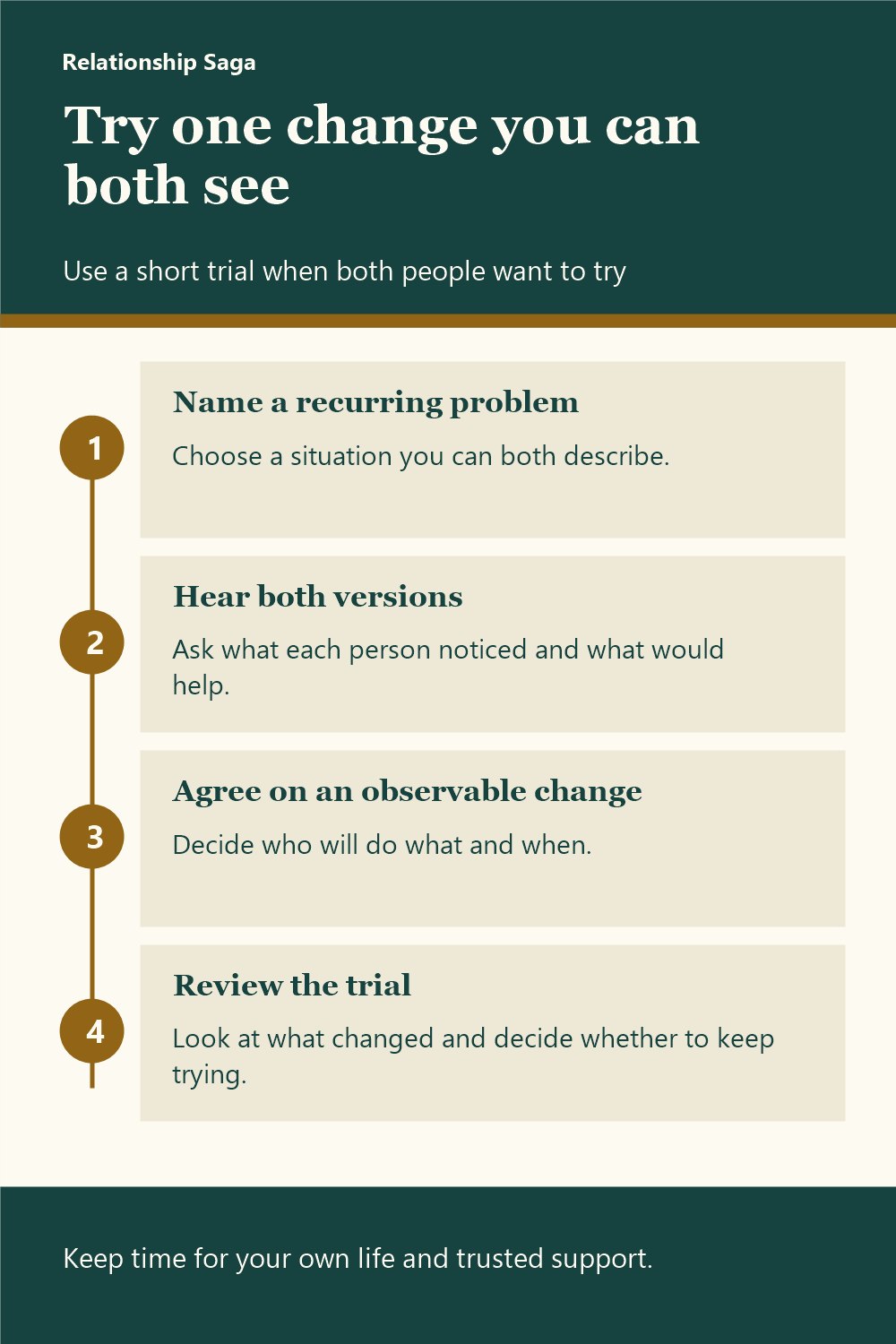
Try one change you can both see
- Name a recurring problem Choose a situation you can both describe.
- Hear both versions Ask what each person noticed and what would help.
- Agree on an observable change Decide who will do what and when.
- Review the trial Look at what changed and decide whether to keep trying.
Keep time for your own life and trusted support.