

If both of you want to work on the relationship, choose one change you can see and review. You may need to talk about a repeated problem, rebalance responsibilities or make more room for connection.
Use the steps that fit your situation. If you are afraid to say no or worried about being harmed, seek private help and put your safety first.
On this page
- 1. Ask if you both want to try
- 2. Talk about one example
- 3. Make a request you can act on
- 4. Keep your own sources of support
- 5. Follow through on your part
- 6. Make the division of work visible
- 7. Give each other room to differ
- 8. Make a small plan to reconnect
- 9. Choose support that suits the situation
- 10. Set a date to review what changed
1. Ask if you both want to try
Each person can say what they hope would change and what they are prepared to do. Give yourself time to think if you are unsure.
2. Talk about one example
Describe what happened and the impact it had. Choose a time when you can both listen and take a break if needed.
3. Make a request you can act on
“Can we agree on pickup times by Thursday?” is easier to test than a request to care more. Ask whether the other person can commit to it.

4. Keep your own sources of support
Make time for friends, rest or an activity you enjoy. Ask for company or practical help when you need it.
5. Follow through on your part
If you missed an agreement, name it and explain what you will change. Check whether the other person needs anything to make the new plan workable.
6. Make the division of work visible
List who notices, plans and completes regular tasks. Try a change that reduces the burden on the person doing more of the work.
7. Give each other room to differ
Discuss which choices affect both of you and which each person can make independently. Different interests can have a place in the same relationship.
8. Make a small plan to reconnect
Choose something you both want to do, such as a walk or a quiet breakfast. Pick a time that fits the week you have.
9. Choose support that suits the situation
A trusted person or qualified professional can help you think through options. For fear, coercion or threats, seek private support before planning a joint conversation.
10. Set a date to review what changed
Ask what improved, what stayed difficult and whether both people want to continue. You can choose a different next step if the effort feels one-sided or unsafe.
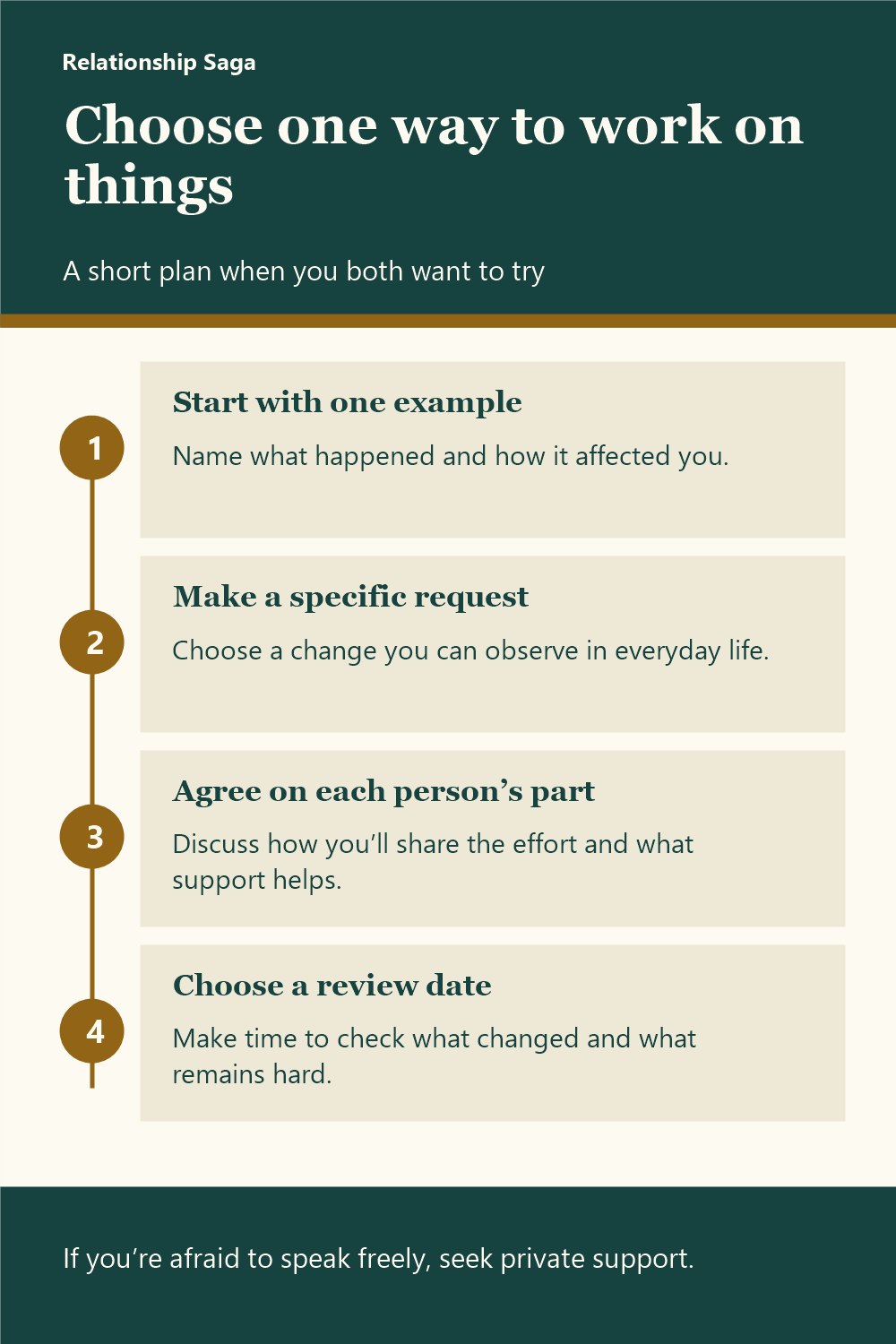
Read the infographic in text
Choose one way to work on things
- Start with one example Name what happened and how it affected you.
- Make a specific request Choose a change you can observe in everyday life.
- Agree on each person’s part Discuss how you’ll share the effort and what support helps.
- Choose a review date Make time to check what changed and what remains hard.
If you’re afraid to speak freely, seek private support.