

If you’ve started to think about leaving because you feel taken for granted, ask yourself whether you want to try a change together or whether you’re already deciding how to end the relationship. That choice will shape what you say.
You can say you’re unhappy directly, if it’s safe to do so. Give one example and explain what you need. Staging jealousy or withholding attention can create a reaction without telling you whether the underlying problem can change.
On this page
- Work out what you want to discuss
- Tell them you’re unhappy and why
- Talk about calls and messages
- Agree who does which everyday tasks
- Make plans you genuinely want
- Keep time for your interests
- Talk to someone outside the relationship
- Name when you’re pulling back
- Say what you can and can’t agree to
- Keep a difficult discussion focused
- Be specific about taking a break
- Choose a realistic time to check in
- Look for care you can see
- Decide what you need to do next
1. Work out what you want to discuss
Name one recurring problem, such as always arranging time together or doing more household work than you agreed. Write down what you want to be different before you start the conversation.
If your partner has threatened you, monitored you or made you afraid to disagree, consider confidential advice before raising the issue. The National Domestic Violence Hotline’s safety planning guide offers a starting point.
2. Tell them you’re unhappy and why
Try: “I’ve been feeling alone in planning our time together. I’m unhappy about how often it falls to me. I’d like to decide together how we’ll share it.” Let them explain how they see it, and check whether you can both agree on a workable change.
If you’re already considering leaving, you can say that plainly. Choose a time when you have room to talk and a way to leave the conversation if you need to.

3. Talk about calls and messages
If a messaging pattern is causing frustration, ask for something clear, such as a heads-up when plans change. Say when you can reasonably reply and ask about their availability too.
4. Agree who does which everyday tasks
If you’re doing more than feels fair, name the work and the result you need. For example, choose who handles dinner twice a week, including planning and cleanup. Revisit the agreement if it proves unrealistic.
5. Make plans you genuinely want
You can go to an event on your own or with friends because you want to be there. If it affects shared plans or responsibilities, talk about the practical details.
6. Keep time for your interests
Pick one interest you want to make room for and put it on the calendar. Ask your partner what they want time for too. An agreement about separate time is easier to keep when it includes the details.
7. Talk to someone outside the relationship
Ask a trusted friend to listen or help you think through your choices. Choose someone who respects your decisions and can keep personal information private.
8. Name when you’re pulling back
If you need space after a tense exchange, say how much time you’d like and when you can talk again. If you don’t know when you’ll be ready, agree on a brief check-in.
9. Say what you can and can’t agree to
You can say, “I can take care of that this week, but I can’t take it on every week.” Offer a different plan if you want to. Your partner can respond, and you can decide whether their answer works for you.
10. Keep a difficult discussion focused
If the talk turns to insults or interruptions, pause it. You can say, “I’ll come back to this when we can both finish what we’re saying.” If that never becomes possible, take the pattern seriously.
11. Be specific about taking a break
If you want a break, clarify what that means for contact, shared responsibilities and how long you’ll take before checking in. Either person can decide they don’t want the arrangement.
12. Choose a realistic time to check in
Agree when you’ll revisit the change, and notice what actually happens in the meantime. If your partner promises to help but you still have to prompt them every time, that’s useful information.
13. Look for care you can see
A sudden burst of attention may feel encouraging. Look for steady changes you both agreed to, such as sharing work, keeping plans or responding with respect when one of you says no.
14. Decide what you need to do next
If you both want to keep working on the relationship, name the next step and choose when to review it. If the same problem keeps returning or you’ve decided to leave, think through the practical support you’ll need.
Your partner can decide what they’re willing to do. You can decide what you are willing to live with.
Read the infographic in text
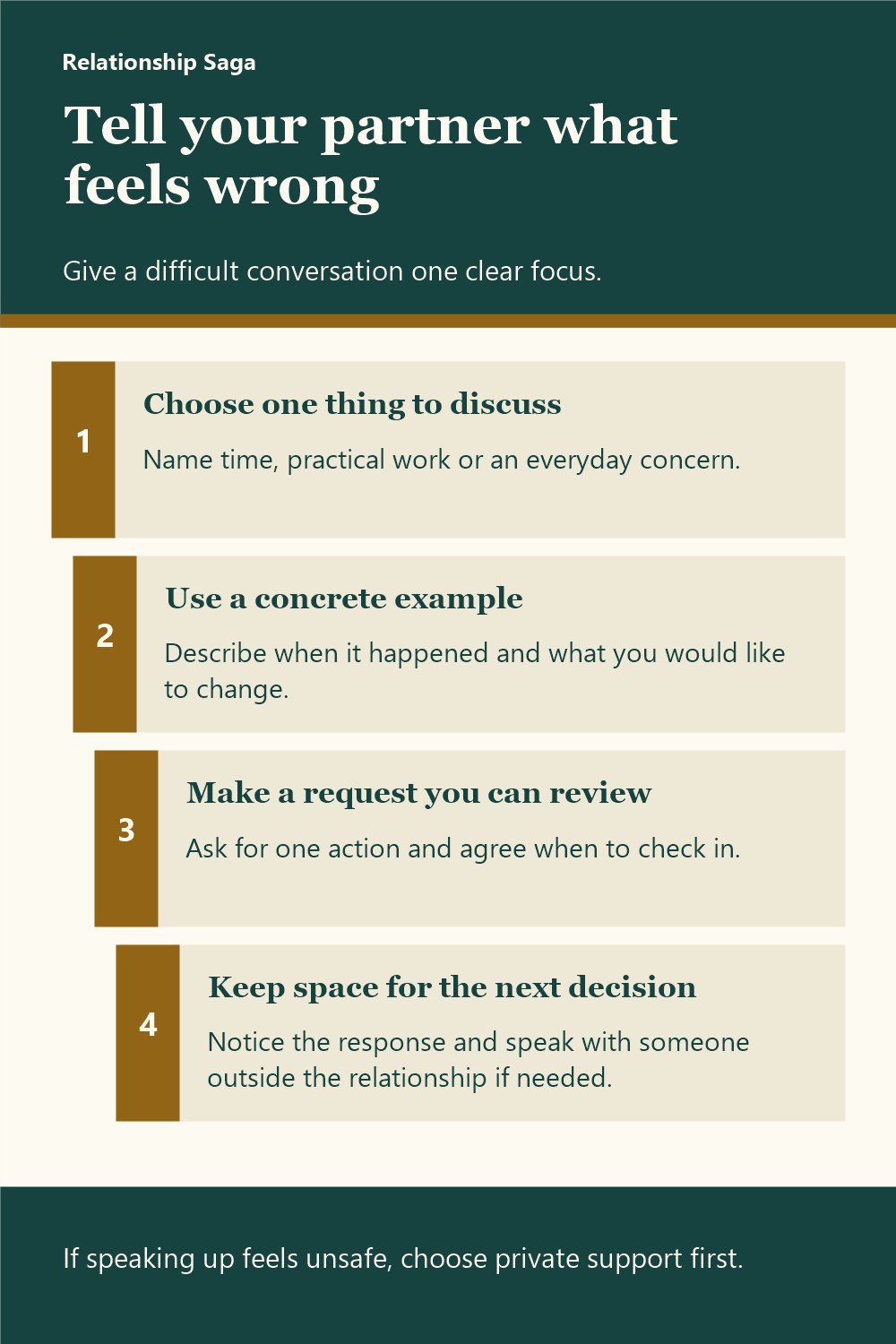
Tell your partner what feels wrong Give a difficult conversation one clear focus.
- Choose one thing to discuss Name time, practical work or an everyday concern.
- Use a concrete example Describe when it happened and what you would like to change.
- Make a request you can review Ask for one action and agree when to check in.
- Keep space for the next decision Notice the response and speak with someone outside the relationship if needed.
If speaking up feels unsafe, choose private support first.