

If you’re unsure whether to stay in a relationship, write down what’s making you consider leaving and what’s making you consider staying. Separate what’s happening now from what you hope might happen. Your safety and freedom to decide matter throughout.
A good starting point is a recent example. What happened? How did each person respond? Has anything changed since the last time you talked about it?
On this page
1. Consider safety first
If you fear retaliation, threats, monitoring or violence, you can seek confidential support before having a conversation about leaving. The National Domestic Violence Hotline’s safety planning guide can help you think through a plan. If a device might be monitored, consider contacting support from a device you can use safely.
2. Name the pattern you’re weighing
An exhausting week and an ongoing pattern can both feel painful. Look at how often the problem happens, what follows an apology and whether you can raise concerns without being punished for it.
Ask yourself what you would need to see over time to feel comfortable staying. Write it in terms of actions someone could observe.
3. Look for willingness on both sides
If you both want to try, agree on a change each person can make and set a time to talk about whether it helped. For example, each of you could take responsibility for planning one evening together this month.
If one person has already decided to leave, they can say so. A promise to try harder does not obligate either person to stay.

4. Think through the practical options
If leaving is on your mind, consider where you could stay, what shared obligations need attention and who could help. You can ask someone you trust to talk through one part of the decision with you.
If you want help deciding, talk to a counselor or another person who can listen without pressuring you. Choose your next step based on what you know, what you need and what you feel safe doing.
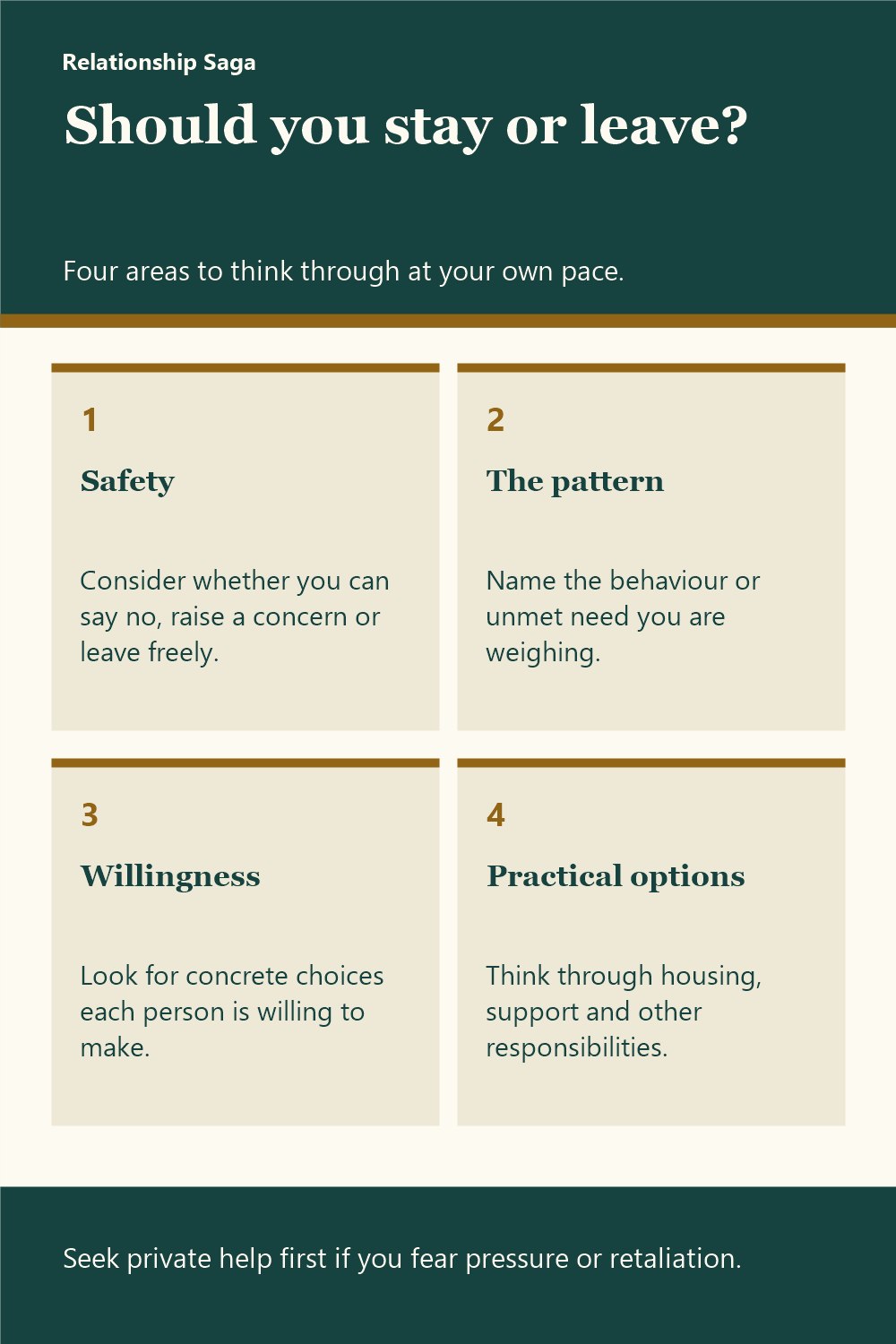
Read the infographic in text
Should you stay or leave? Four areas to think through at your own pace.
- Safety Consider whether you can say no, raise a concern or leave freely.
- The pattern Name the behaviour or unmet need you are weighing.
- Willingness Look for concrete choices each person is willing to make.
- Practical options Think through housing, support and other responsibilities.
Seek private help first if you fear pressure or retaliation.