

Jealousy can show up when you worry about losing a relationship or feel unsure about an agreement. It can be hard to sit with that feeling. Take a moment to name what you saw or heard before choosing how to respond.
If your partner is jealous, you can listen and decide what you are comfortable sharing. Both people need freedom to see friends, protect their privacy and say no.
On this page
Identify what triggered the feeling
Try writing three short sentences. What happened? What did you feel? What did you assume it meant? If your partner canceled a plan, ask about the cancellation before drawing a conclusion about who they were with.
Talk about one agreement or need
When you’re calm, say what happened and what would help. “When I found out about the change afterward, I felt left out. Could you tell me when our plans change?” Ask them what they understood the agreement to be.
Respond to behavior you can verify
If an agreement was repeatedly broken, name the pattern and decide what contact or commitment works for you. If uncertainty remains, you can choose how much of it you want to live with. You can make that decision without searching someone’s devices.
Recognize demands that limit your freedom
Repeated demands for passwords, location access or approval of friendships can put pressure on your choices. If you feel monitored, intimidated or unsafe, speak privately with a trusted person or a local support service. The U.S. National Domestic Violence Hotline offers safety-planning resources.
Agree on a next step you can both keep
Choose something specific, such as checking in if plans change. See whether you both follow through. If the same situation keeps causing distress, decide what support or distance would help.
Read the infographic in text
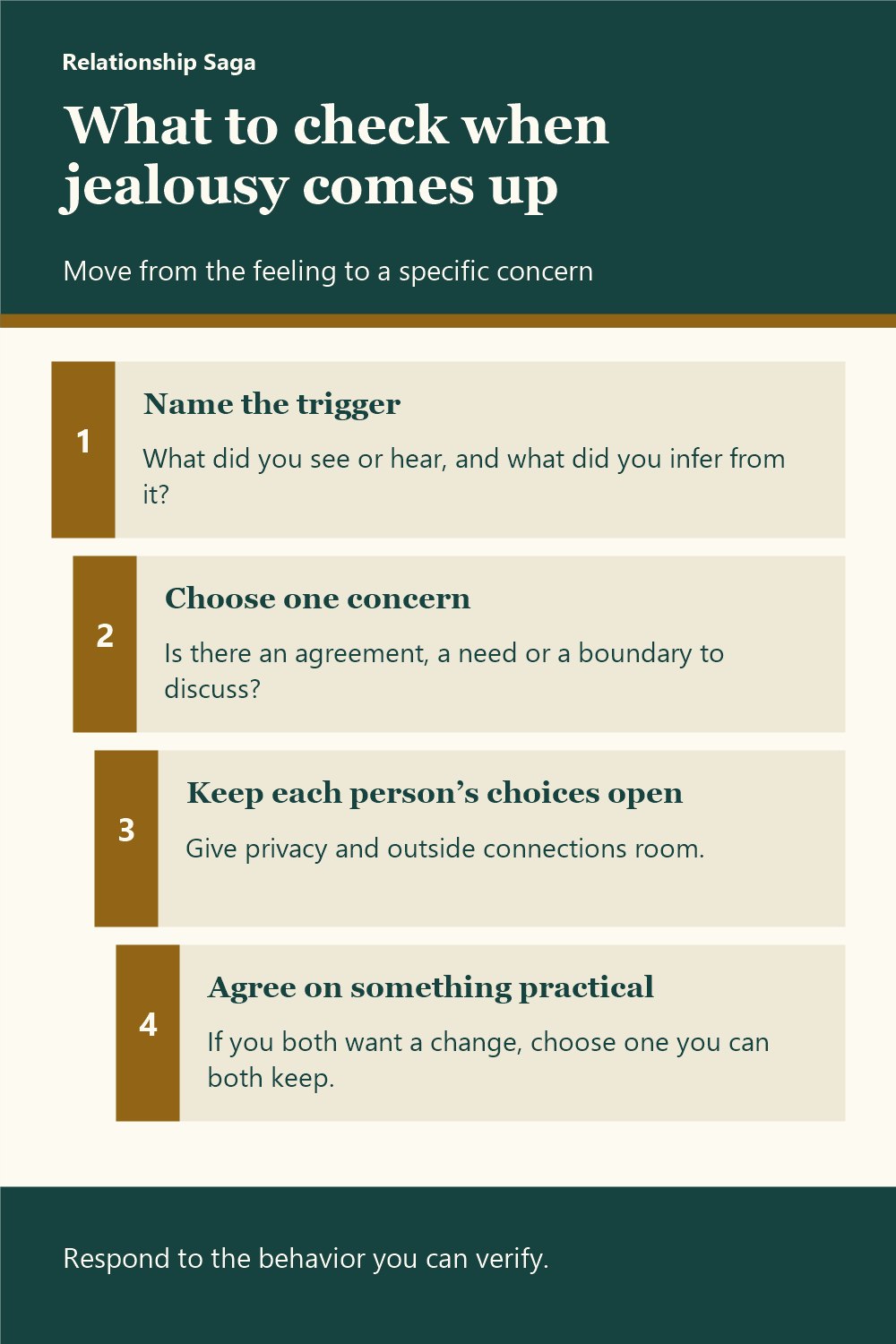
What to check when jealousy comes up
- Name the trigger What did you see or hear, and what did you infer from it?
- Choose one concern Is there an agreement, a need or a boundary to discuss?
- Keep each person’s choices open Give privacy and outside connections room.
- Agree on something practical If you both want a change, choose one you can both keep.
Respond to the behavior you can verify.