

An old disagreement can matter when it shows a pattern, when you still need an answer or when it affects a choice you are making today. Choose a time when both of you can listen and decide what you want from the conversation.
On this page
Choose one example and name its effect
“When we discussed the move, you told your family before we agreed. I still feel uneasy making plans together.” Focus on what happened and why it matters now. Give the other person a chance to say what they remember.

Ask for a specific response
Decide whether you want an apology, information or a different agreement. “Can we agree to check with each other before sharing a decision?” gives both of you something concrete to consider.
Give an unresolved issue its own time
If the past comes up during an argument about something else, pause and set a time to talk about it. Keep the new conversation to one issue. A break can help both people return with enough attention to hear each other.
Notice what happens after the conversation
An agreement matters if it changes what happens next. Check whether either of you needs to follow up. If every attempt to speak ends in threats or punishment, seek private support before trying the same conversation again.
Make room for memories that feel good
You can remember what helped you solve a past disagreement or thank each other for care you still value. If you’d like to see an earlier piece from this site, read the archived RelationshipSaga essay on love in action.
Read the infographic in text
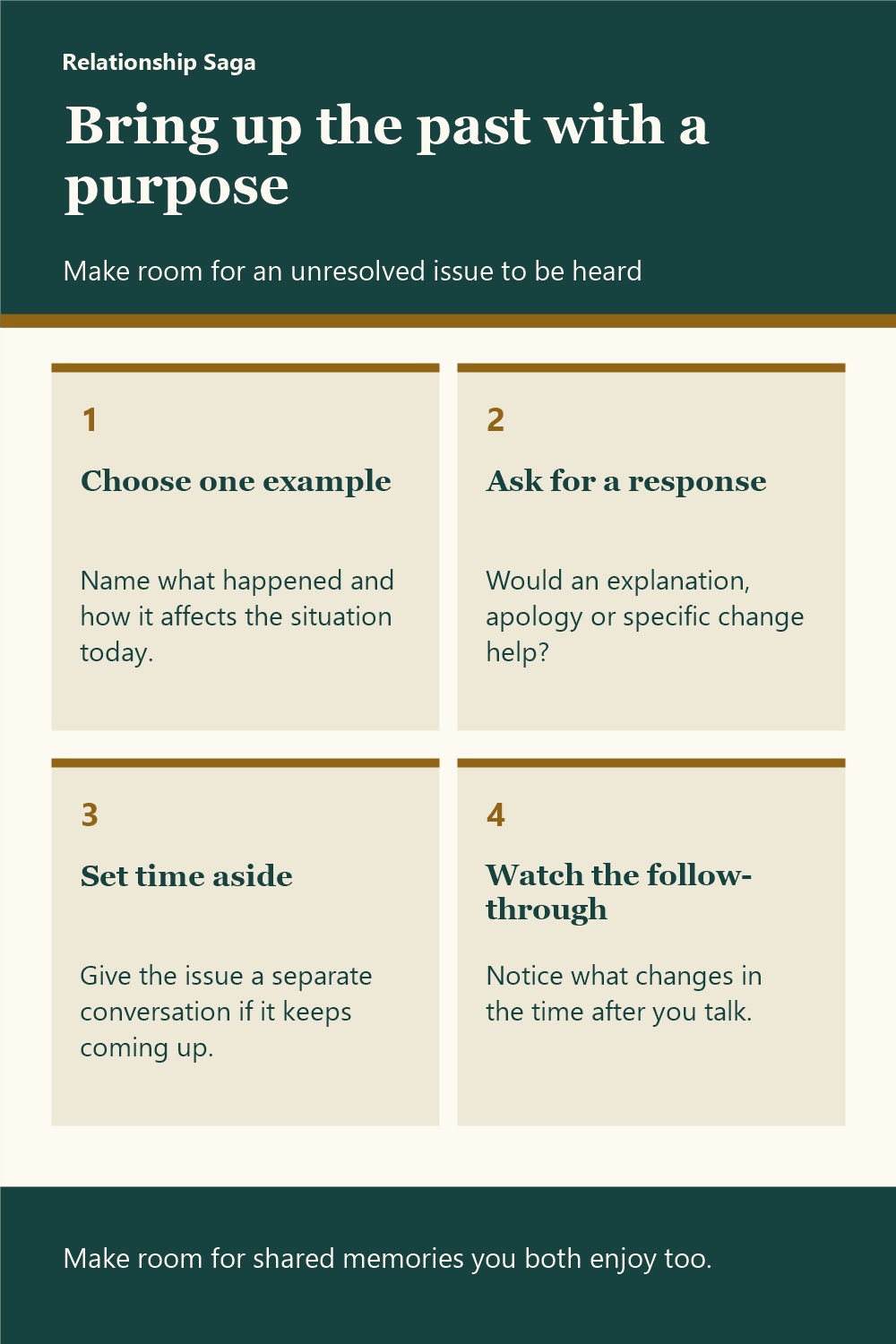
Bring up the past with a purpose
- Choose one example Name what happened and how it affects the situation today.
- Ask for a response Would an explanation, apology or specific change help?
- Set time aside Give the issue a separate conversation if it keeps coming up.
- Watch the follow-through Notice what changes in the time after you talk.
Make room for shared memories you both enjoy too.