

A relationship can end while you still love the person. Missing them does not mean you made the wrong decision, and feeling relieved does not mean the relationship meant nothing. You do not have to erase your memories or reach a particular feeling before attending to everyday life.
Start with what needs care now: your next meal, necessary arrangements, the contact you want and someone you can talk to. These are choices to adapt to your circumstances, rather than a timetable for getting over someone.
On this page
1. Allow feelings without making them instructions
You might feel sad, angry, peaceful, uncertain or several things in the same afternoon. There is no required sequence, and a difficult day does not cancel an easier one. You also do not have to feel devastated to take the ending seriously.
Try describing what is happening in specific words: “I miss our Sunday walks,” or “I am worried about evenings alone.” A particular need is easier to respond to than the conclusion that your whole future has disappeared.
You can miss a familiar routine without restarting the relationship. If you want to send a message, pause long enough to consider its purpose and whether contact is welcome. Wanting reassurance does not give either person a right to the other’s attention.
2. Choose workable contact limits
Some people prefer a period without contact. Others need a channel for shared responsibilities or returning possessions. Decide what is relevant to your situation rather than treating complete blocking or immediate friendship as the only healthy option.
You could mute social updates, ask friends not to relay news or keep practical messages to one channel. A specific limit might be: “Please email about collecting your things. I am not available to discuss getting back together.” You can revise a workable arrangement as circumstances change.
If children are involved, keep messages about their needs separate from arguments about the relationship. For legal arrangements, seek qualified local advice. If contact includes threats, unwanted monitoring or intimidation, prioritise safety and individual support rather than a final private meeting.
3. Give ordinary routines some support
Choose something small enough to do on an unsettled day: make a simple meal, put clean clothes where you can find them or arrange a short conversation with a friend. You do not need to turn the breakup into a demanding self-improvement project.
Notice the parts of the week that feel particularly empty. Instead of filling every evening, plan one manageable activity for a difficult time. An accessible outing, a familiar programme or time with someone you trust may fit better than a crowded event you do not want.
Ask for concrete help if it would be useful: company while you collect belongings, help with a household task or a conversation that is about something other than your ex. Friends do not need to find a replacement partner or persuade you to be positive.
4. Reflect without erasing responsibility
You can value parts of the relationship and still recognise why it ended. If memories become a loop, write two brief lists: what you miss and what was not workable. Neither list needs to prove that one person was entirely good or bad.
Taking responsibility for your own behaviour can include an honest acknowledgement and a change in how you act. It does not require accepting responsibility for someone else’s dishonesty, intimidation or violence. Nor does missing someone require overlooking harm.
You do not owe forgiveness, a reunion or a lesson that makes everything worthwhile. If prayer or another personal spiritual practice matters to you, it can be part of reflection without being treated as a prediction about whether your ex will return.
5. Make room for a next step
Choose a near-term action connected to your own life, such as making a weekend plan or returning to an interest. It can be ordinary. Dating again is optional, and there is no need to demonstrate that you have moved on before your former partner does.
If you are struggling to manage daily life, or distress feels difficult to carry alone, consider talking with a qualified professional. You can ask for support without labelling every feeling or waiting until things become unbearable.
For now, ask: “What would make tomorrow a little more manageable?” The answer can guide one decision without requiring you to settle the whole future.
Read the infographic in text
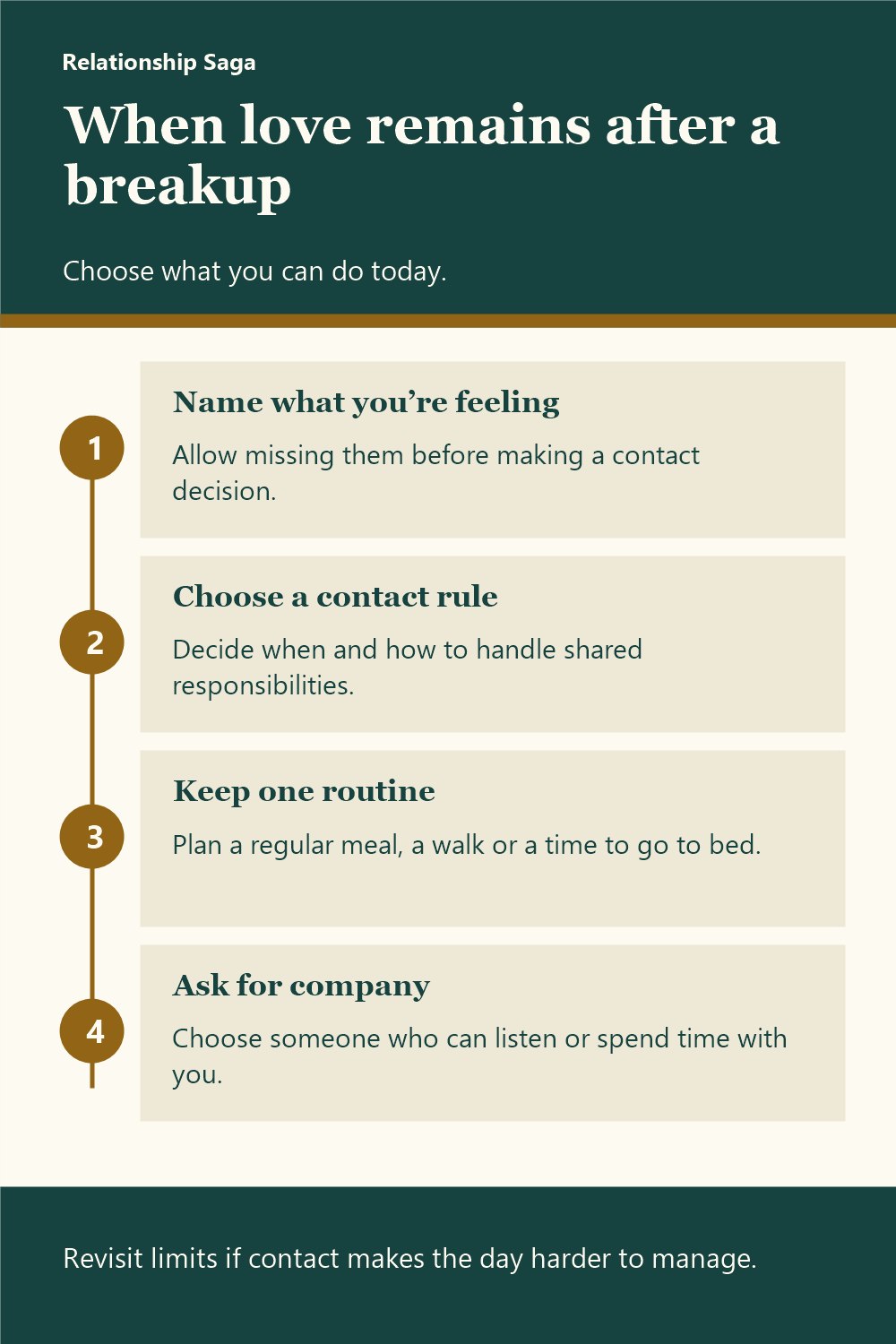
When love remains after a breakup Choose what you can do today.
- Name what you’re feeling Allow missing them before making a contact decision.
- Choose a contact rule Decide when and how to handle shared responsibilities.
- Keep one routine Plan a regular meal, a walk or a time to go to bed.
- Ask for company Choose someone who can listen or spend time with you.
Revisit limits if contact makes the day harder to manage.