

When a relationship ends and you share a child, you may still need to coordinate school, appointments or handoffs. It can help to give those conversations a predictable place in your week and find a separate place to talk about the breakup.
Choose one manageable change first. For example, keep routine schedule updates in one channel and ask a friend if you can call them after a difficult exchange.
On this page
Separate urgent parenting updates from breakup conversations
Keep messages short and specific. “The school concert starts at six. Can you confirm who is picking Sam up?” is easier to respond to than a message about the whole relationship. Use a separate conversation if you both agree there is a personal issue worth discussing.
Make exchanges predictable when it’s safe
Write down dates, times, who collects your child and what your child needs to bring. If your child asks why you live apart, offer an age-appropriate answer and reassure them they are cared for. The American Academy of Pediatrics has guidance on supporting children after separation.
Keep your child out of adult disputes
Send schedule and money questions directly to the other parent through the agreed channel. Avoid asking your child to relay messages or report on the other household. Give them room to tell you how a change feels and follow up if they need help.
Decide what personal contact you want
You can decline unplanned visits and decide what kinds of personal conversations or physical intimacy you are comfortable with. A short boundary can help: “I’m available to discuss pickup. I’m keeping personal conversations separate.”
Plan for safety when needed
If there are threats, stalking, violence or pressure around access, get private guidance before changing arrangements. A local domestic abuse advocate can help with safety planning, and a local family-law professional can help you understand any custody requirements. The U.S. National Domestic Violence Hotline has safety-planning resources.
Build routines that belong to you
Make time for a friend, a walk or a quiet evening after your child is asleep. You can start dating again if and when you feel ready. Let your child’s needs and your comfort guide decisions about introducing someone new.
Read the infographic in text
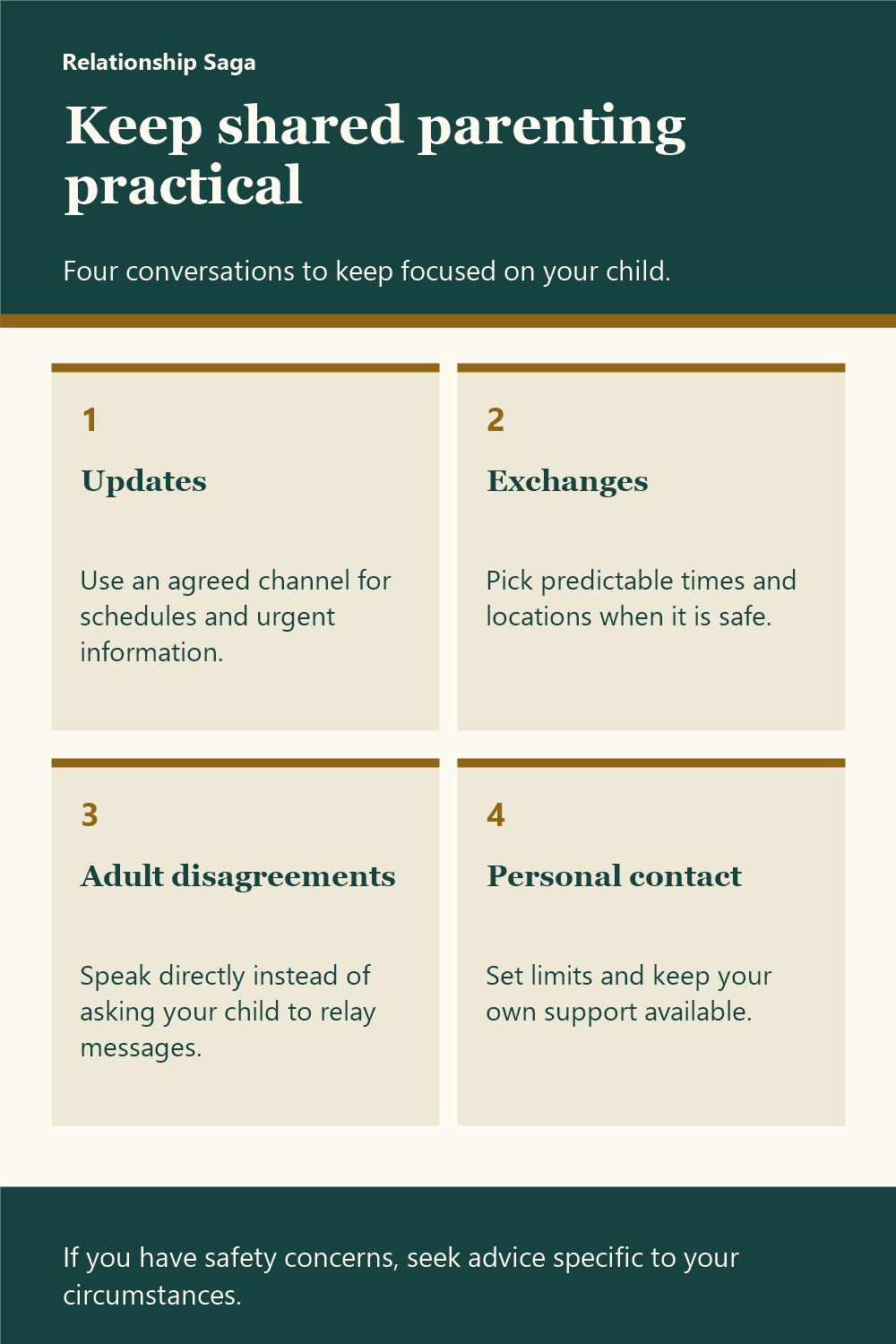
Keep shared parenting practical Four conversations to keep focused on your child.
- Updates Use an agreed channel for schedules and urgent information.
- Exchanges Pick predictable times and locations when it is safe.
- Adult disagreements Speak directly instead of asking your child to relay messages.
- Personal contact Set limits and keep your own support available.
If you have safety concerns, seek advice specific to your circumstances.