

When a relationship feels exhausting, ask which part keeps falling to you. You might be organizing all the time you spend together, managing a shared task from start to finish or being the only one to raise problems. Naming one burden gives you something specific to discuss.
There are times when one partner needs more help. A temporary change during illness or a hard week is different from a pattern in which one person can’t count on the other to share responsibility.
On this page
1. Name one thing that keeps falling to you
Choose a recent example. If you organized a weekend away, did you also research the options, check dates, book everything and handle changes? It may be that you want help with the planning, rather than simply someone to show up.
If you’re tired from several parts of life, consider which tasks need attention now and which can wait. Share your limits before committing to another plan.

2. Ask for one change you can observe
Try: “I’ve been arranging every visit for a while, and I’m tired. Could you choose a date and make the plans for the next one?” Give your partner room to suggest something they can actually do.
Agree on what the task includes. When both people know who’s responsible for the next step, you can tell whether the agreement has helped.
3. Notice what happens afterward
If your partner follows through or tells you they need to change the plan, that’s information. If you’re still doing the task and reminding them every time, say so. You can decide whether the arrangement is workable.
When a partner is genuinely unavailable, talk about what can be paused or done differently. Consider how long the arrangement is likely to last and what help would make it manageable.
4. Make room for your own needs
Keep an activity or a relationship outside the partnership that helps you feel like yourself. You can also ask someone you trust to listen while you decide what to do.
If talking about your needs brings threats, humiliation or retaliation, consider confidential support before raising the issue again. If both of you are able to talk safely, you can decide whether you want to try another change or step back.
Read the infographic in text
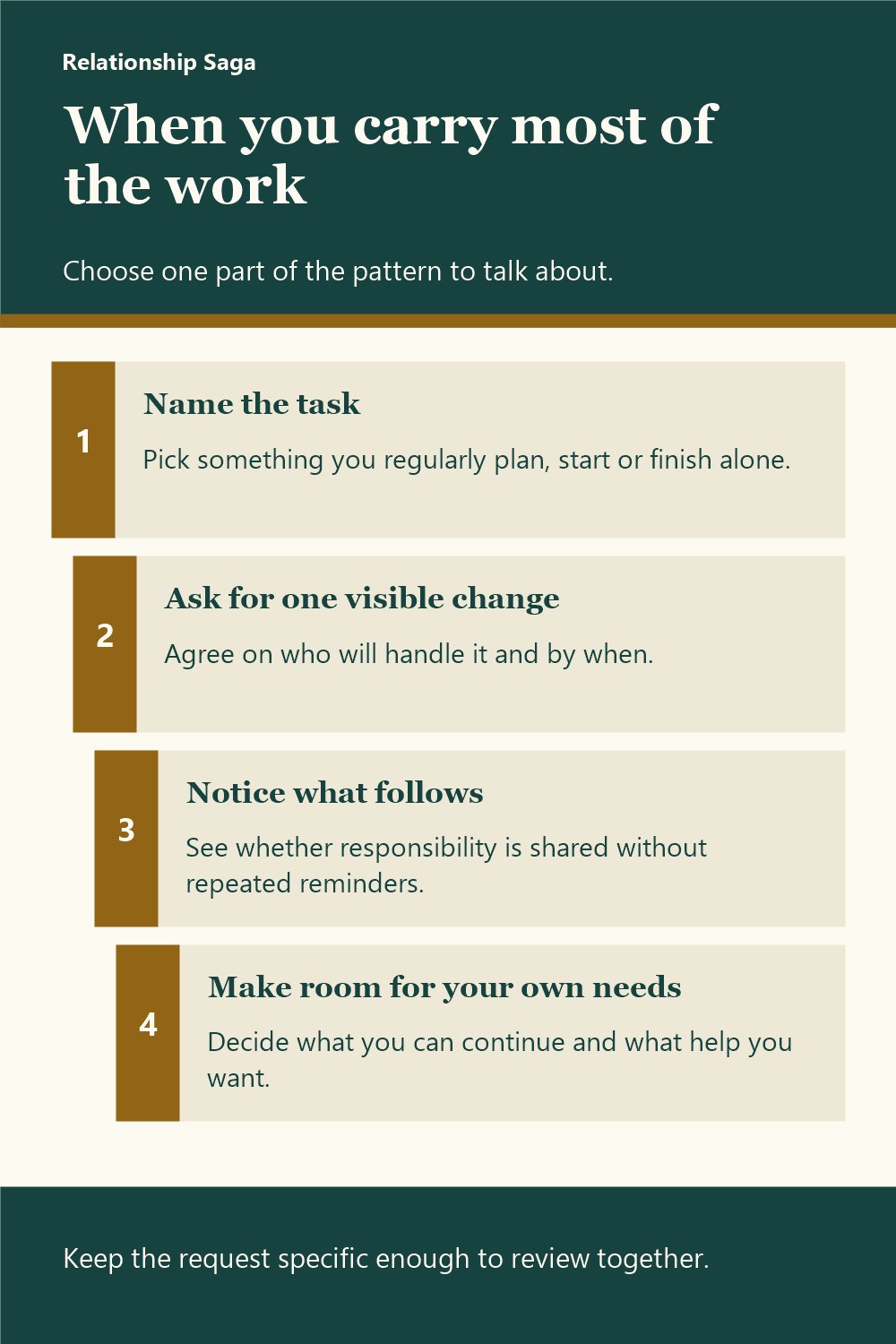
When you carry most of the work Choose one part of the pattern to talk about.
- Name the task Pick something you regularly plan, start or finish alone.
- Ask for one visible change Agree on who will handle it and by when.
- Notice what follows See whether responsibility is shared without repeated reminders.
- Make room for your own needs Decide what you can continue and what help you want.
Keep the request specific enough to review together.