

When someone breaks your trust, you may question your judgment as well as their choices. You can take time to understand what happened and decide how much access you want to give them now.
If you’re considering repair, name what it would take for you to feel safer. Start with a change you can observe. You can revise your decision as you learn more.
On this page
Give yourself room to recover
Write down what happened, what you know for sure and what you still need to ask. Talk with someone who can listen without rushing you. Treat the other person’s choices as their responsibility.

Choose the contact you want now
You can take a break, ask for practical messages only or agree on a time to talk. If you must coordinate shared responsibilities, pick one channel. You can handle immediate logistics while taking time on the rest.
Look for a specific change
If someone repeatedly shared private information, for example, ask them to stop and agree on what they can say when others ask. See how they handle the next situation. A change you can observe gives you more information than a general promise.
Give forgiveness and trust their own pace
You may choose forgiveness as part of moving forward. Trust can grow as someone keeps agreements and respects limits. You can decide which parts of the relationship, if any, you want to resume.
Seek private help if you feel unsafe
If you are afraid of being threatened, tracked or hurt, talk with a trusted person or a local domestic abuse service before you meet or make changes. The U.S. National Domestic Violence Hotline explains how to plan for safety.
Read the infographic in text
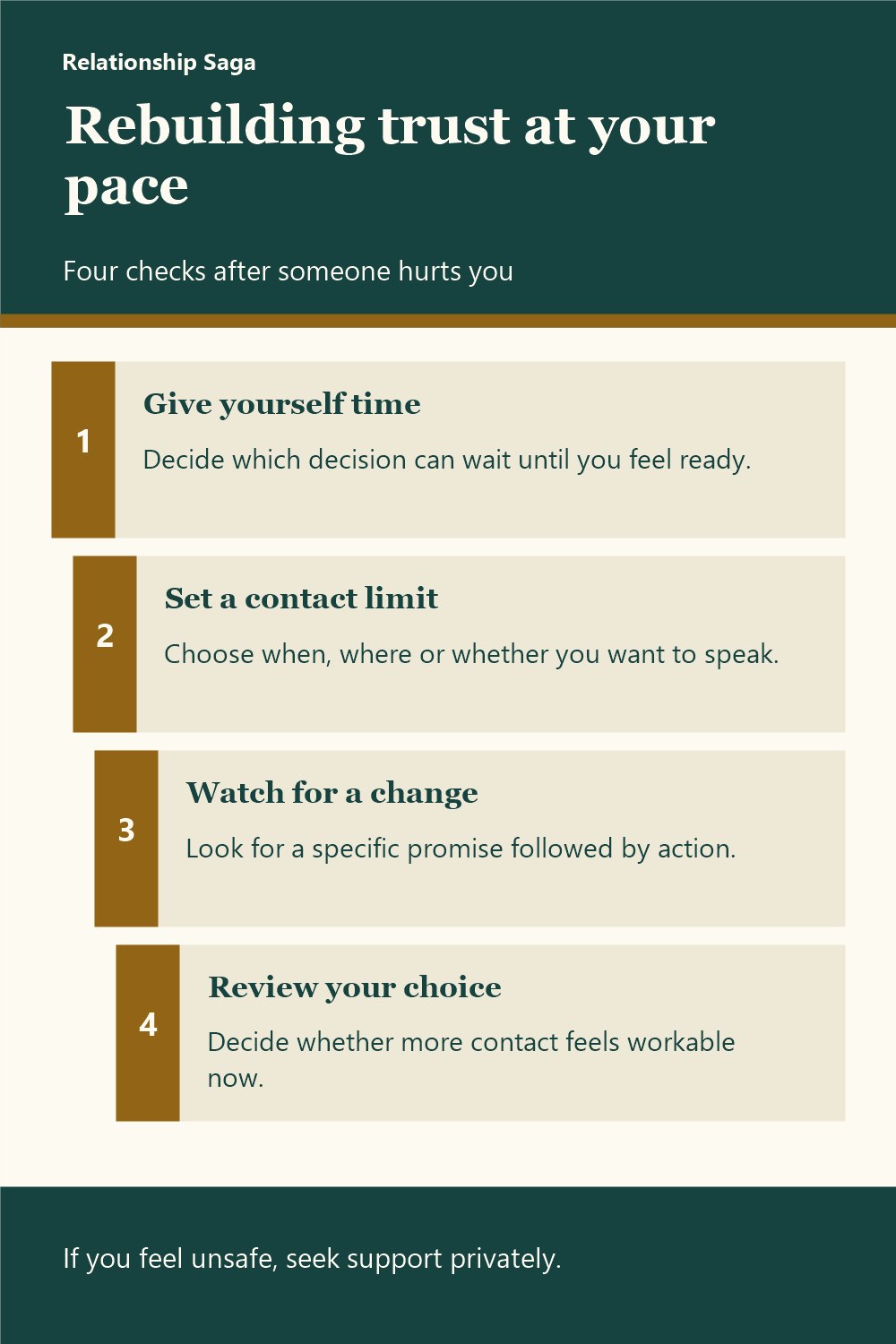
Rebuilding trust at your pace Four checks after someone hurts you
- Give yourself time Decide which decision can wait until you feel ready.
- Set a contact limit Choose when, where or whether you want to speak.
- Watch for a change Look for a specific promise followed by action.
- Review your choice Decide whether more contact feels workable now.
If you feel unsafe, seek support privately.