

If you broke a relationship agreement by cheating, begin by owning what you chose and what it cost your partner. Rebuilding trust takes action and time. Your partner can decide how much contact they want and whether they want to try again.
If you both want to discuss repair, choose a private, calm time and agree that either of you can take a break. Start with facts your partner needs for their own choices.
On this page
- Name the agreement you broke
- Work out what you will change
- Give a specific apology
- Talk about contact and follow-through
- Share facts your partner needs to make decisions
- Agree on boundaries you both understand
- Give your partner time and choices
- Pause if a conversation becomes unsafe
- Let physical and emotional closeness return at a mutual pace
- Respect your partner’s decision
Name the agreement you broke
Say clearly what happened and which agreement it broke. Let your partner describe the impact in their own words. Give them room to react or end the conversation without asking them to reassure you.
Work out what you will change
Look at the decisions that led there. For example, you may have continued a private exchange after agreeing to stop it. Identify what you will do earlier next time. Take responsibility for that work yourself.
Give a specific apology
“I hid a relationship and broke our agreement. That took away your chance to decide based on the truth. I’m sorry.” Follow the apology with what you are actually prepared to do. Give your partner time to consider it.
Talk about contact and follow-through
If contact with the other person continues because of work or another obligation, say what is unavoidable. Explain what you can change and carry it out. Be honest about any ongoing personal contact before making promises about the relationship.
Share facts your partner needs to make decisions
Be clear about timing, ongoing contact, shared money or anything that may affect sexual health. A health professional can help each of you decide on STI testing if there may have been exposure. Let your partner choose which further details they want to hear and when.
Agree on boundaries you both understand
Discuss what each of you means by exclusivity, privacy and contact with other people. Choose one or two concrete commitments that you can check together. Each person keeps the ability to decide what they share and what they do next.
Give your partner time and choices
Your partner may want fewer messages, time apart or a separate place to sleep. Ask what contact is welcome and respect the answer. Keep agreed responsibilities, such as childcare or bills, even if they choose distance.
Pause if a conversation becomes unsafe
Anger and sadness can be expressed without threats or insults. If a conversation escalates, give each other space and resume only if it feels safe. When there is intimidation, stalking or violence, seek private support and prioritize safety.
Let physical and emotional closeness return at a mutual pace
If both of you want to reconnect, try a small activity that feels comfortable, such as a walk or coffee. Ask before touching or bringing up a sensitive topic. Neither person owes affection or sex as proof of progress.
Respect your partner’s decision
Set a time to review what changed if you both want to keep trying. If your partner wants to end the relationship, discuss necessary logistics and accept their choice. You can still keep working on your own behavior.
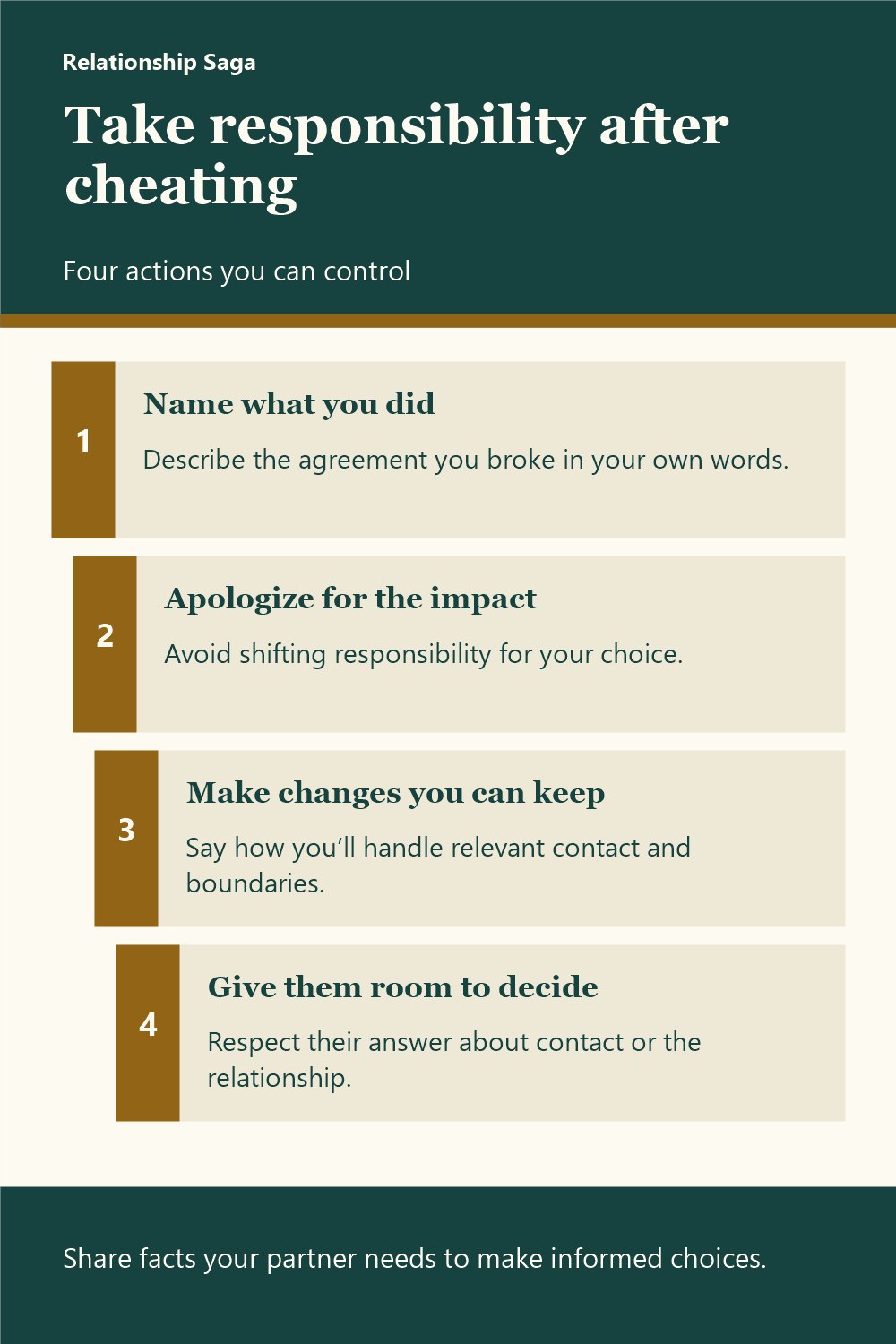
Read the infographic in text
Take responsibility after cheating Four actions you can control
- Name what you did Describe the agreement you broke in your own words.
- Apologize for the impact Avoid shifting responsibility for your choice.
- Make changes you can keep Say how you’ll handle relevant contact and boundaries.
- Give them room to decide Respect their answer about contact or the relationship.
Share facts your partner needs to make informed choices.